Andorra Travel Guide
Welcome to the Taste2Travel Andorra Travel Guide!
Date Visited: May 2018
Revised: October 2026
Introduction
After many years of exploring Europe, I had visited almost every corner of the continent. However, one small country had always eluded me: the Principality of Andorra. I had passed through the region several times, yet I had never crossed the border. During a later trip to Europe, I finally made the journey into the Pyrenees Mountains to explore this tiny alpine nation. Andorra is a fascinating destination and the world’s only country where Catalan is the sole official language.
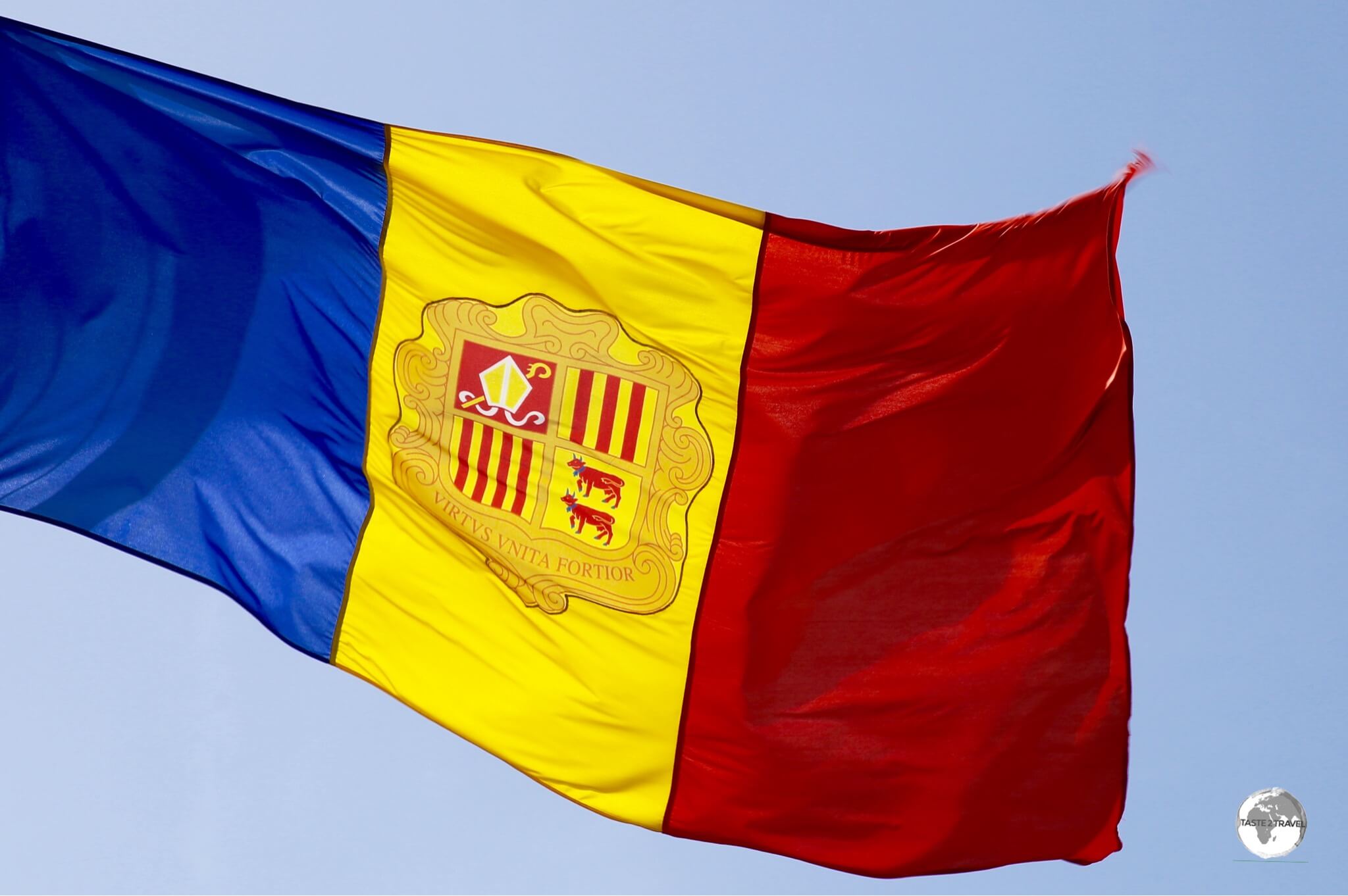
The flag of Andorra, a vertical tri-colour of blue, yellow, and red with the coat of arms of Andorra in the centre.
Under its constitution, Andorra is a principality with two co-princes who serve as joint heads of state: the President of France and the Bishop of Urgell in Spain.
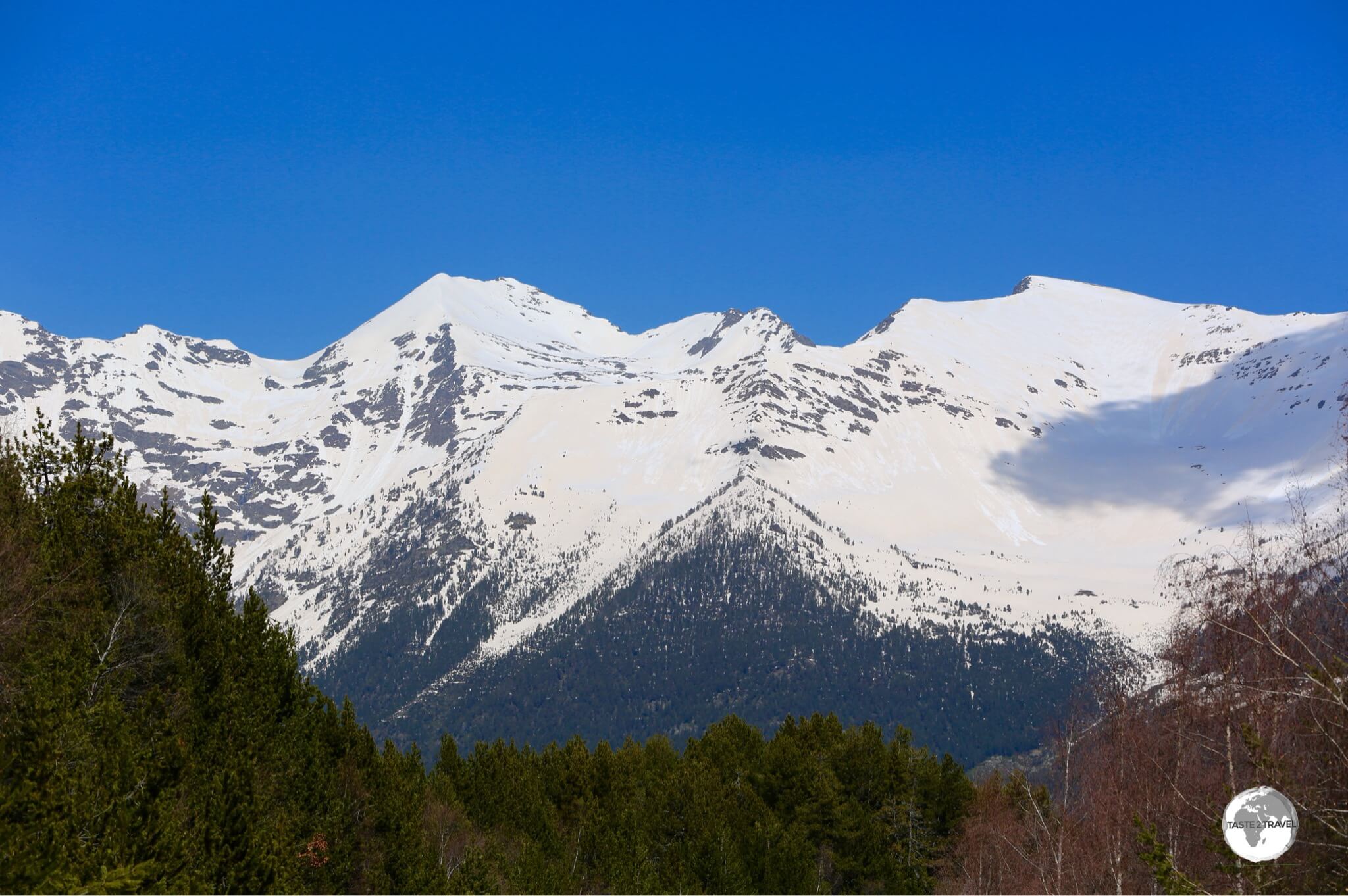
The backbone of Andorra, the Pyrenees mountain range separates the Iberian Peninsula from the rest of Europe.
Andorra sits high in the southern Pyrenees Mountains, between the neighbouring countries of France and Spain. Although it covers a small area and has a modest population (77,281), travellers often overlook it when planning European itineraries.
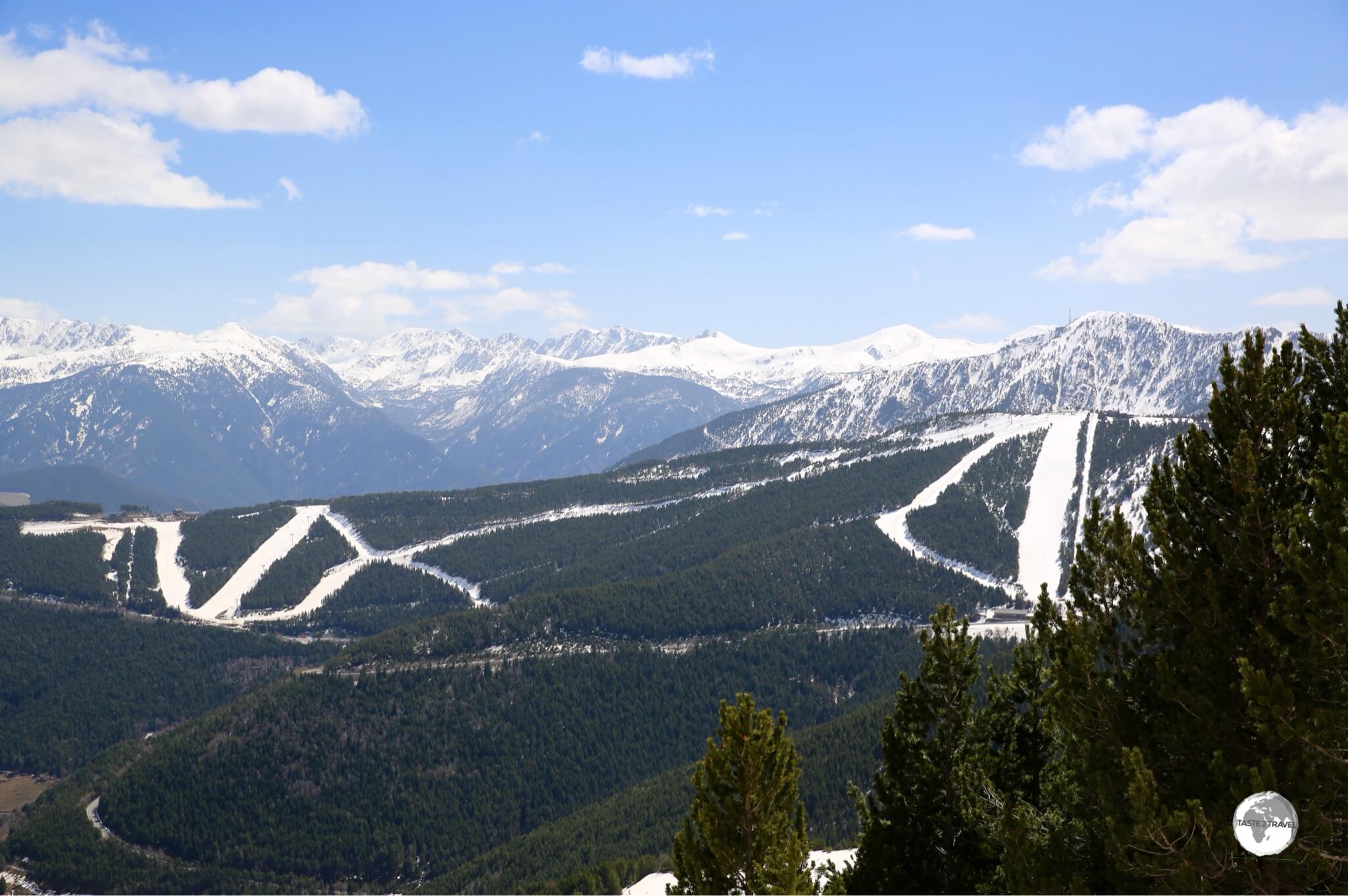
The white ski slopes of the Vallnord resort cut a clear path across the mountain.
However, visitors who make the journey discover spectacular hiking trails, excellent skiing, gourmet food, duty-free shopping and charming towns surrounded by dramatic mountain peaks. Andorra is a beautiful and fascinating destination that deserves a place on your itinerary.
Location
Andorra is a small, landlocked country in southwestern Europe, nestled in the eastern Pyrenees Mountains between France to the north and Spain to the south.
Covering approximately 468 square kilometres, Andorra is one of Europe’s smallest countries. Its mountainous terrain features deep valleys, rugged peaks and alpine landscapes. The capital, Andorra la Vella, sits in the central valley of the Gran Valira River and is the highest capital city in Europe, at approximately 1,023 metres above sea level. Rugged mountains dominate the landscape, and the country has an average elevation of 1,996 metres (6,549 ft).
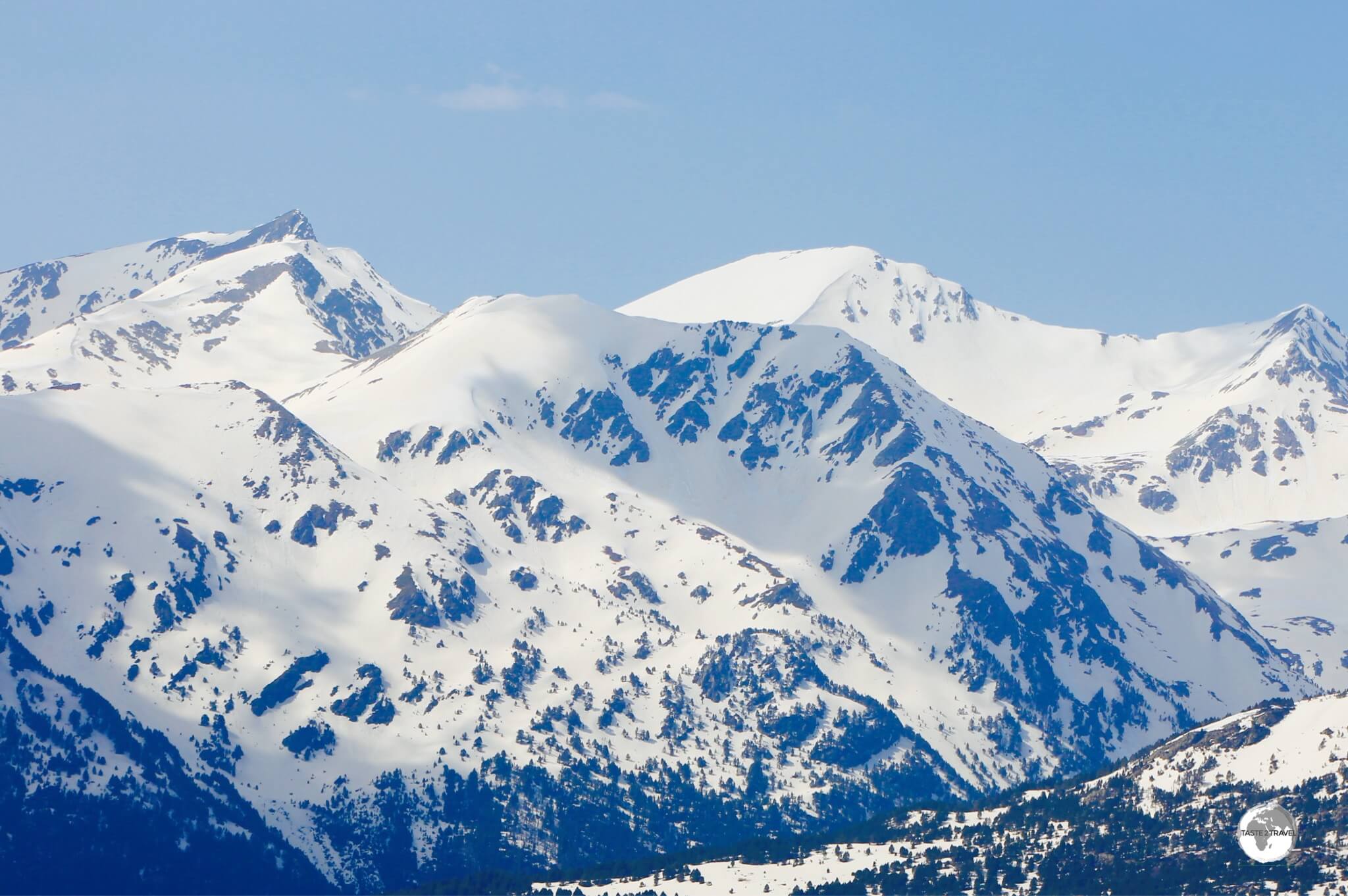
The towering Pyrenees mountain range, Andorra.
Although Andorra has no coastline, its location between France and Spain makes it a popular destination for mountain tourism, skiing and cross-border shopping.
History
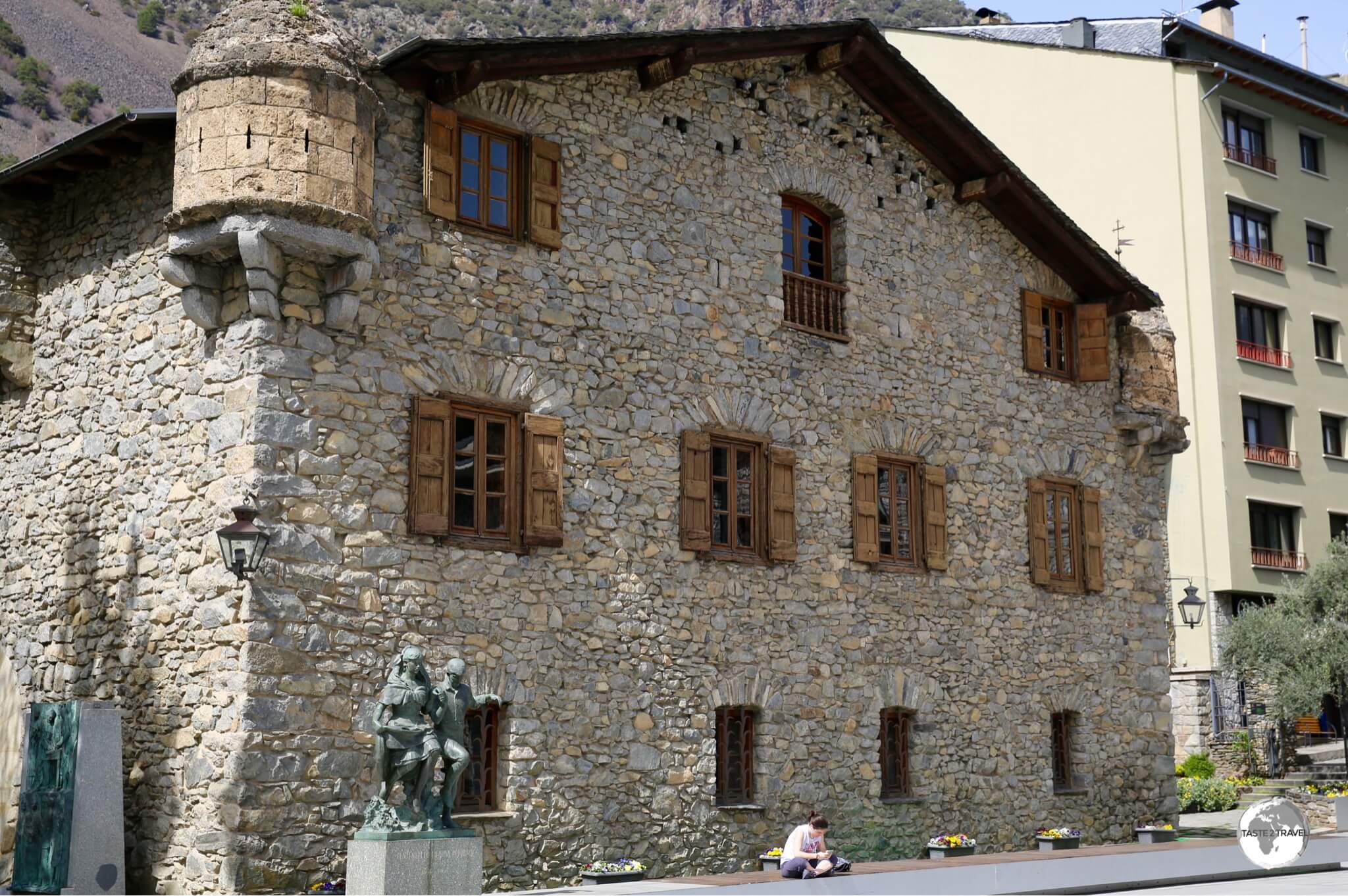
Originally built as a manor house, the 16th century “Casa de la Vall” previously housed the General Council (Parliament of Andorra).
Early History
Andorra is a remarkable survival from an earlier period in European history, when the continent consisted of thousands of small sovereign territories. Over time, most of these micro-states became part of larger nations. Andorra, however, retained its independence. Andorra’s origins stretch back more than a thousand years.
Tradition credits the Frankish king Charlemagne with taking control of the territory from Muslim forces in AD 803. His son, Louis the Pious (also known as Louis the Fair and Louis the Debonaire), later granted the Andorrans a charter of liberties. In AD 843, Louis’ son, Charles II, transferred control to the Counts of Urgell, based in nearby La Seu d’Urgell (now in Spain). The Counts subsequently passed authority to the Bishops of Urgell.
In the late 13th century, a dispute between the Spanish Bishops of Urgell and the French heirs to the County of Urgell led to a unique arrangement. Andorra came under the joint authority of two princes: the Bishop of Urgell in Spain and the French head of state. Each received an annual payment as a symbolic tribute.
Andorra Today
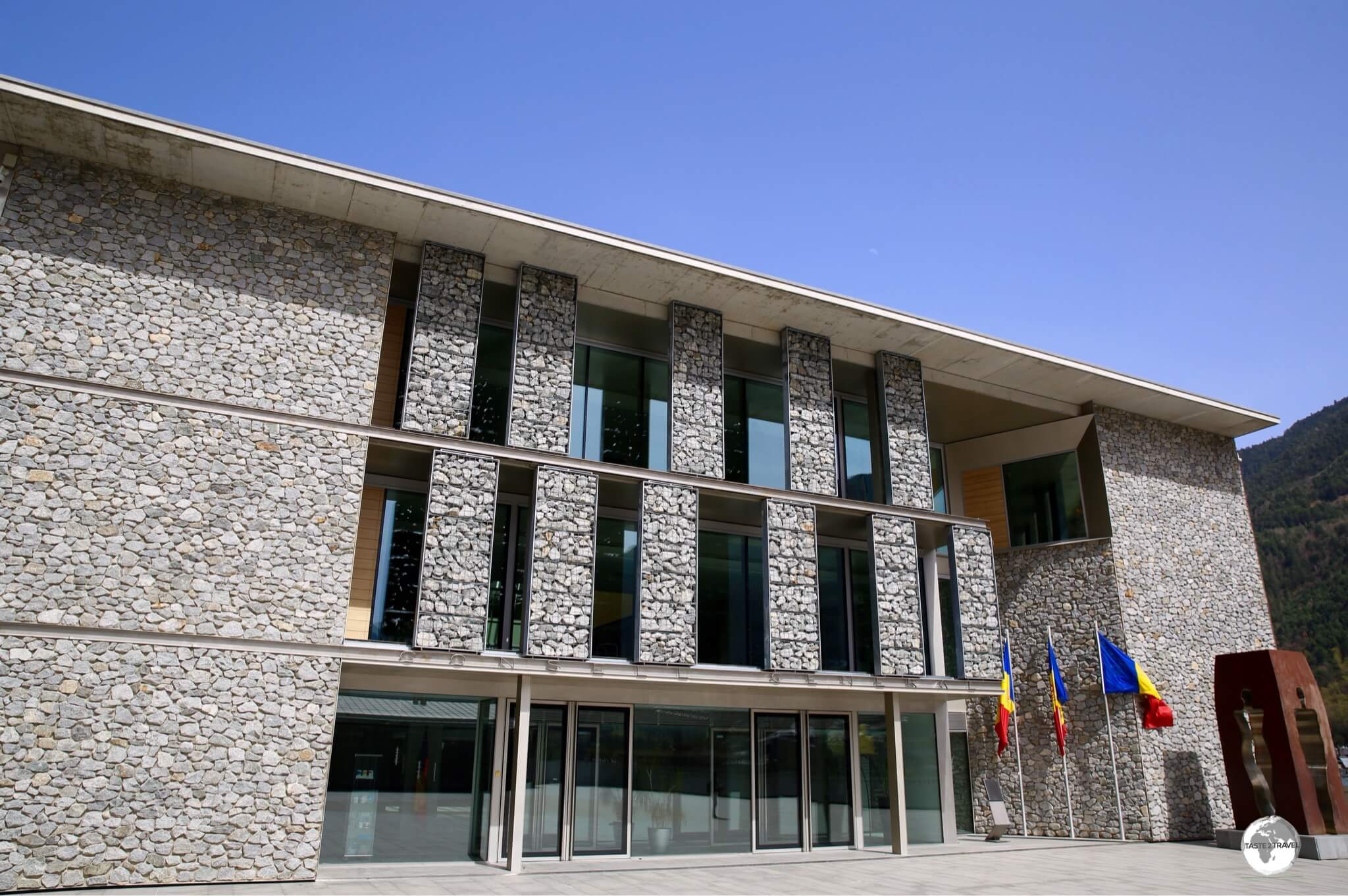
The New General Council – the parliament of Andorra.
This feudal system remained in place until March 1993. That month, Andorrans approved a new constitution and formally established a parliamentary co-principality. The constitution reduced the co-princes’ powers and created separate executive, legislative and judicial branches.
Later that year, Andorra joined the United Nations. Today, tourism drives Andorra’s economy, while financial services also play an important role. The country has long attracted attention for its low-tax environment and banking secrecy laws.
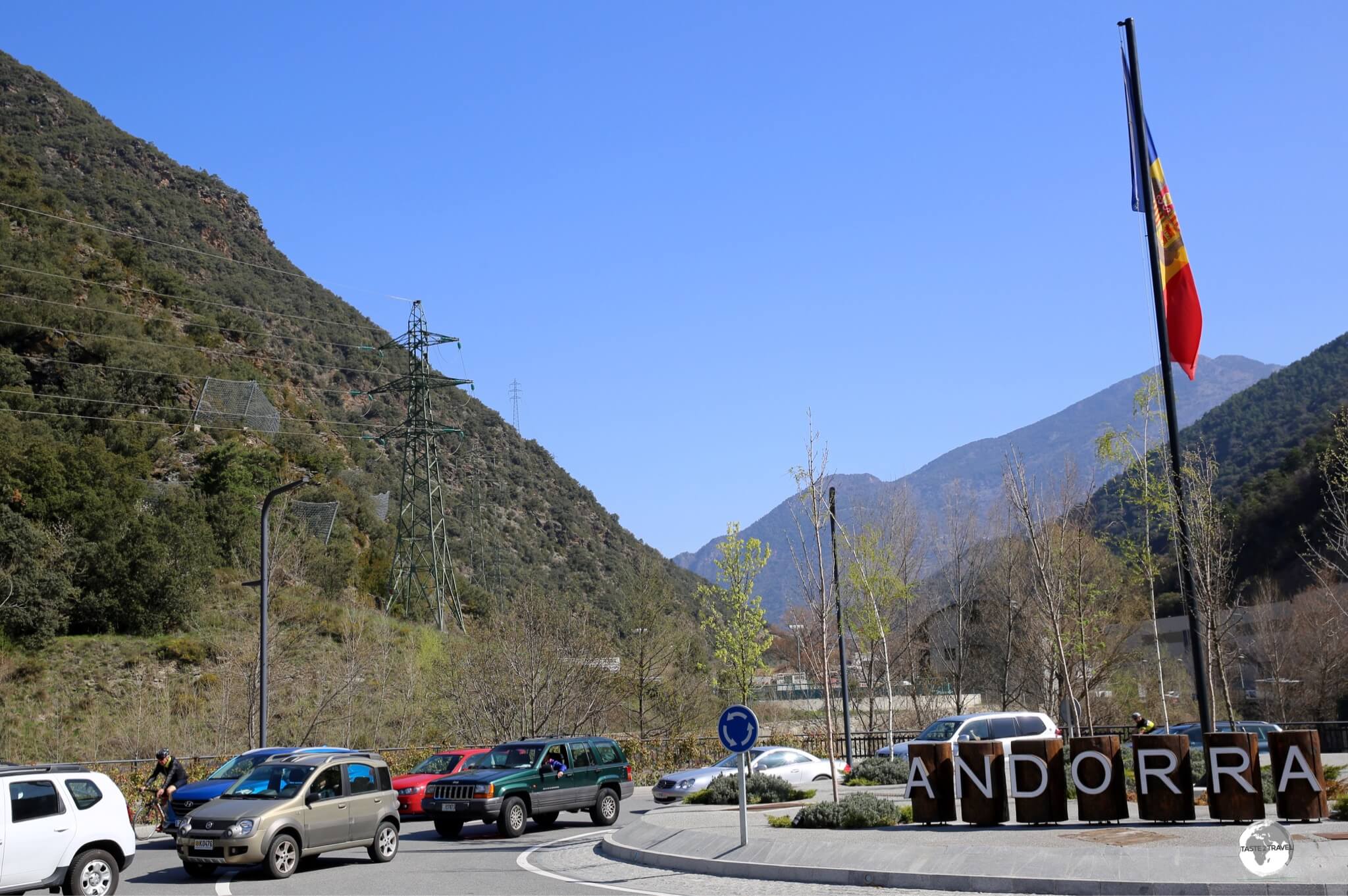
The busy land border between Spain and Andorra.
Low taxes and the absence of many customs duties have helped Andorra develop into an international retail centre. In particular, French and Spanish day-trippers visit for duty-free shopping. However, this reputation also means that Spanish customs officials often carry out thorough checks on travellers and vehicles leaving Andorra.
Currency and Costs

A set of Andorra Euro Coins.
Image Source: fleur-de-coin.com
Currency
An interesting fact: Andorra did not have its own official currency before 2002. Instead, it traditionally used both the French franc and the Spanish peseta. When France and Spain adopted the Euro (€) in 2002, Andorra also began using the new currency. Although Andorra is not a member of the European Union, an agreement with the EU allows it to use the Euro (€) as its official currency. The agreement also gives Andorra the right to mint its own euro coins.
Costs
Thanks to its low-tax environment, Andorra can be relatively affordable by European standards. During my visit, I paid €54 per night for a comfortable mid-range room at the Hotel Festa Brava. Breakfast at a nearby café cost less than €10. I also rented a car through Goldcar for €22 per day on a multi-day booking. Meanwhile, a restaurant main course with a glass of wine could cost as little as €10. For a comfortable visit, I suggest the following daily budgets:
- Budget: €80
- Mid-range: €80-175
- Top-end: €175+
Sights
Andorra La Vella
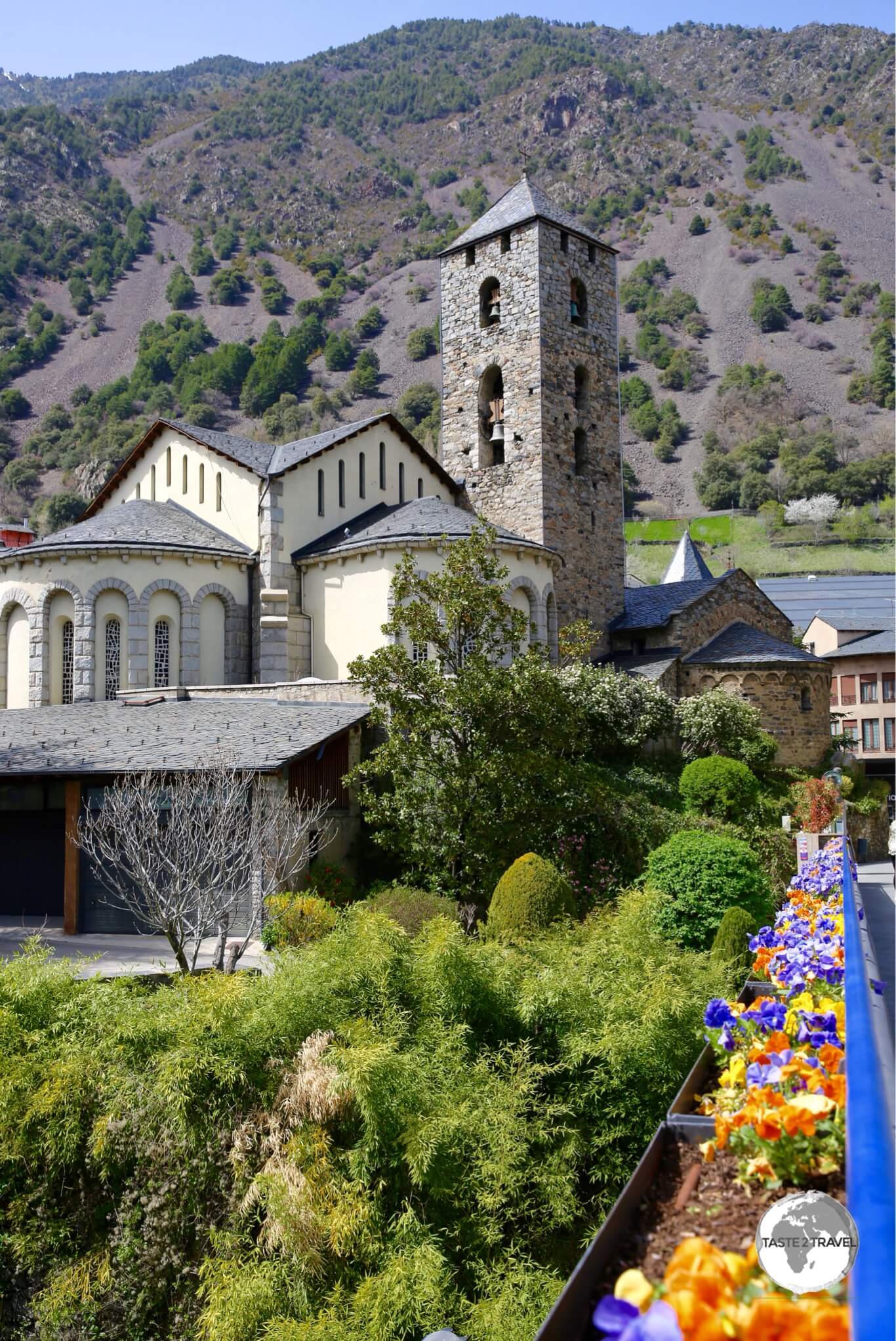
A centre-piece of the old town, Sant Esteve church was built in the 11th-12th century.
At an elevation of 1,023 metres (3,356 feet), Andorra la Vella sits high in the eastern Pyrenees. It is Europe’s highest capital city. Despite having a population of around 22,000, the capital feels more like a relaxed large town. You can explore its compact centre on foot in a day. Most historic attractions sit in the old town, while the main shopping streets occupy the neighbouring newer district.
Old Town
The old town’s main attraction is the historic Casa de la Vall. A wealthy family built this manor house in 1580, and it later became the home of the General Council (Andorra’s parliament). In 2011, parliament moved into a modern building next door. The Casa de la Vall now operates as a museum.
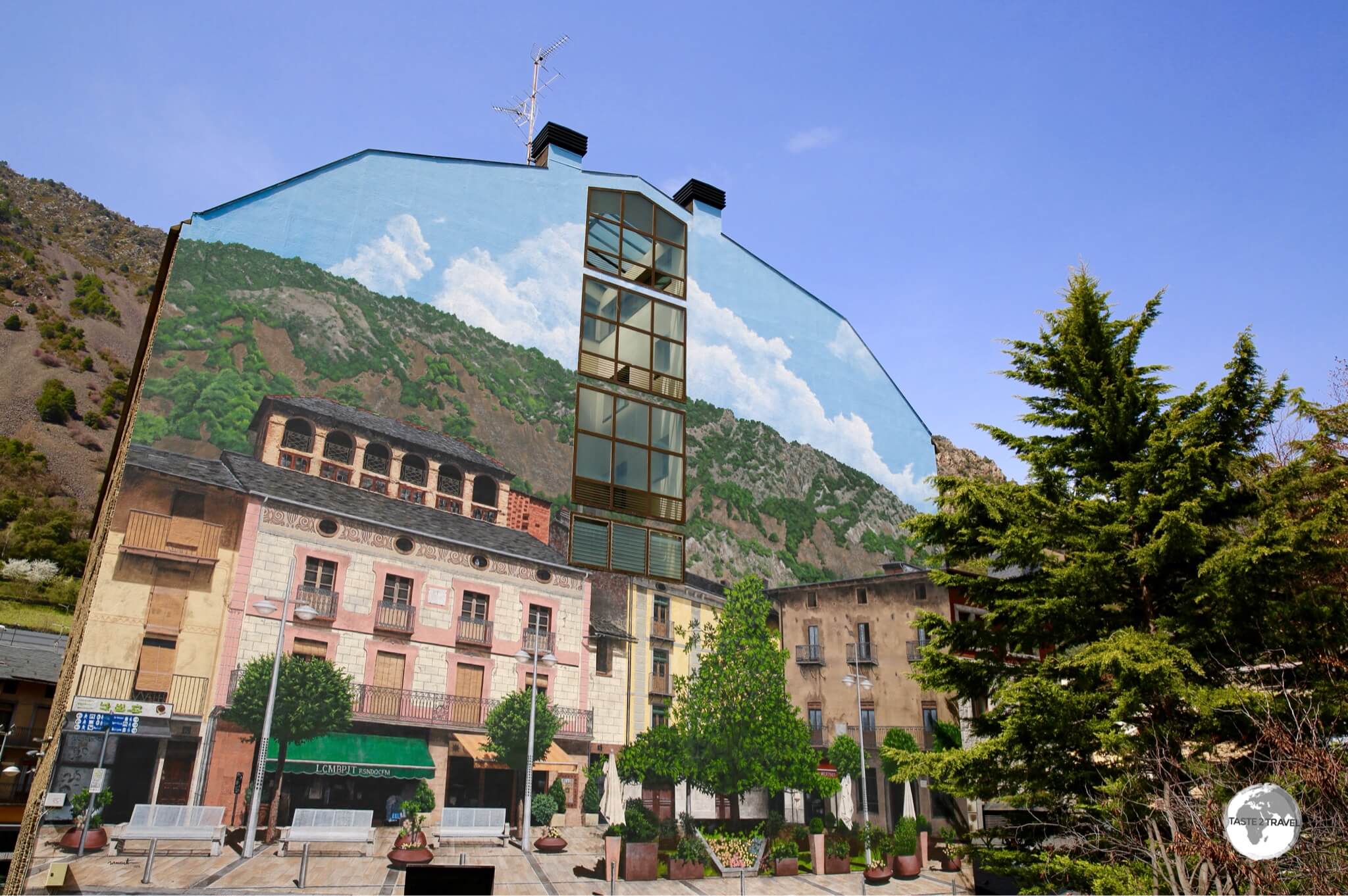
“Transparency” by Spanish artist Samantha Bosque.
Nearby, the wall of a building features a remarkable trompe-l’oeil painting called “Transparency” by Spanish artist Samantha Bosque. The artwork recreates the square hidden behind the building. Stand in the right spot and you can align the painting’s left edge perfectly with the mountain peak in the background.
New Town
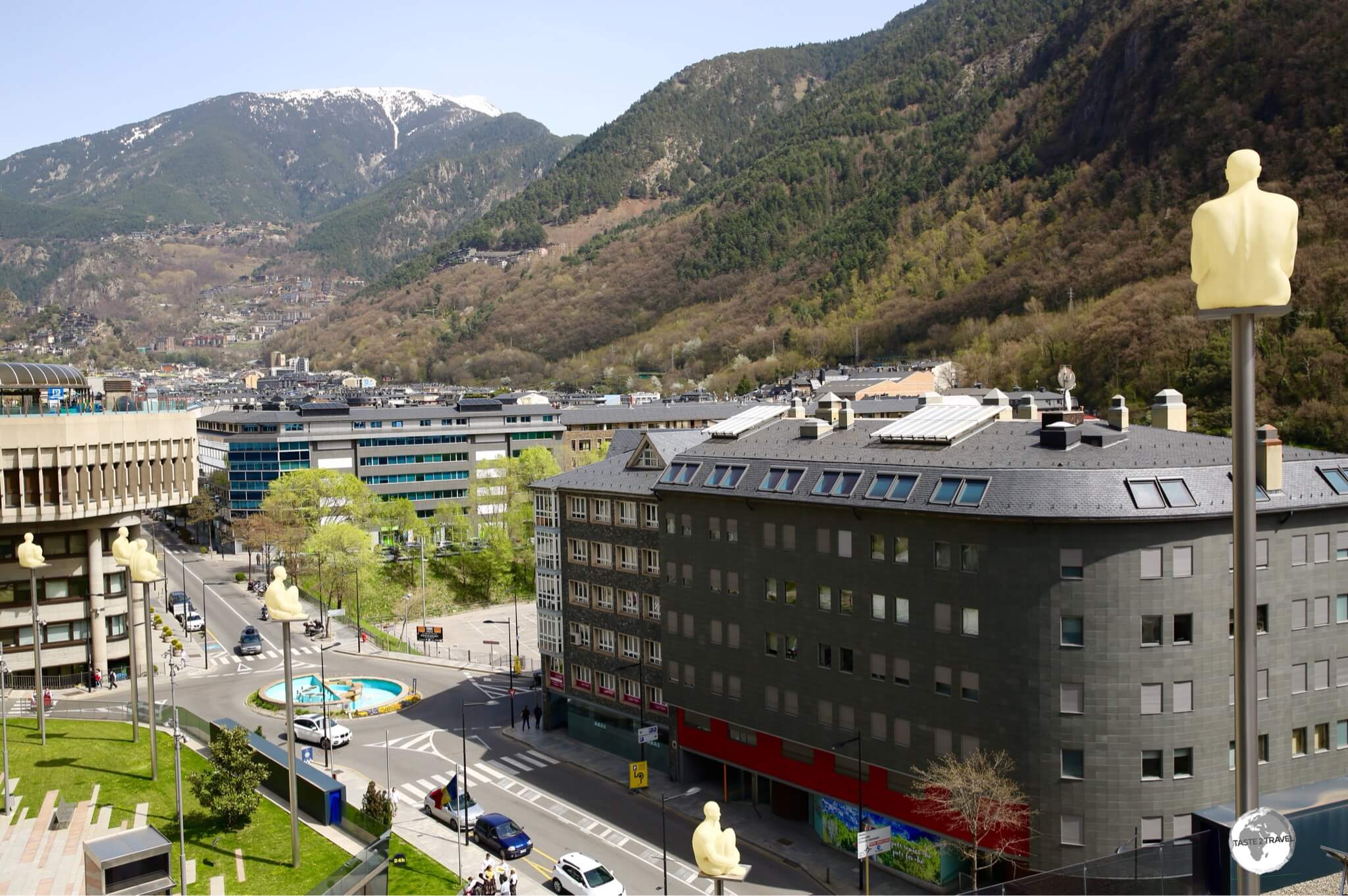
“7 Poetes” by Jaume Plensa.
Below the new parliament building, Plaça Lidia Armengol Vila features “7 Poetes”, an eye-catching installation by Spanish artist Jaume Plensa. The seven seated figures represent Andorra’s seven parishes. At night, lights illuminate the sculptures, creating a calm space amid the busy city.
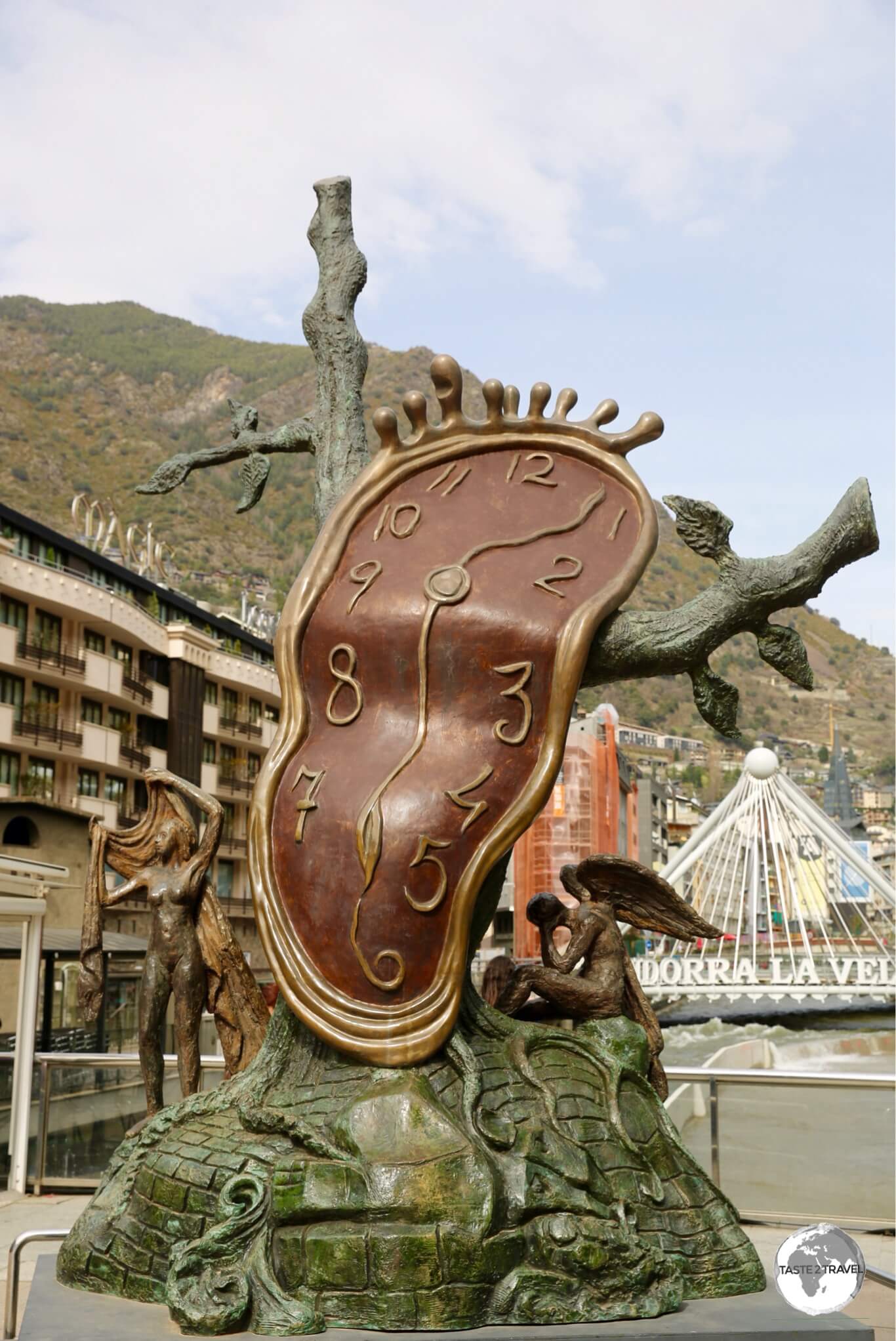
“La Noblesse du Temps” by Salvador Dalí.
Andorra la Vella even has a sculpture by Salvador Dalí. In the newer part of town, beside the Gran Valira River at Plaça de la Rotonda, you’ll find La Noblesse du Temps. This 16-foot bronze clock reflects Dalí’s unmistakable surrealist style. Its elongated clock face rests on a tree-like trunk beneath a crown, symbolising the passage of time. There is even a Cartier watch shop nearby – an amusing coincidence.
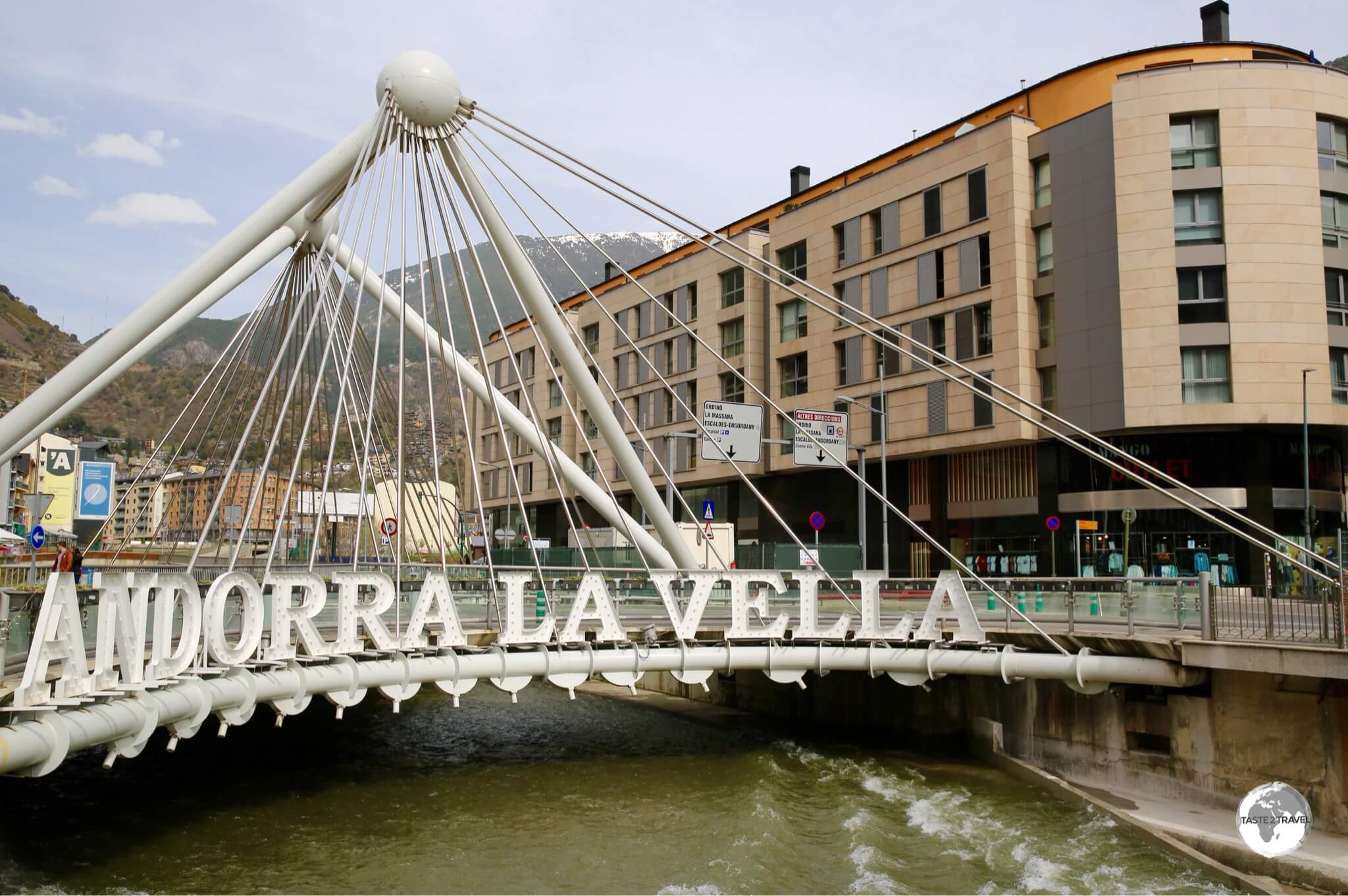
The “Pont de Paris” in downtown Andorra La Vella.
A short walk from Dalí’s surreal sculpture stands the more understated Pont de Paris. This cable bridge crosses the often fast-flowing Gran Valira River.
Outside Andorra La Vella
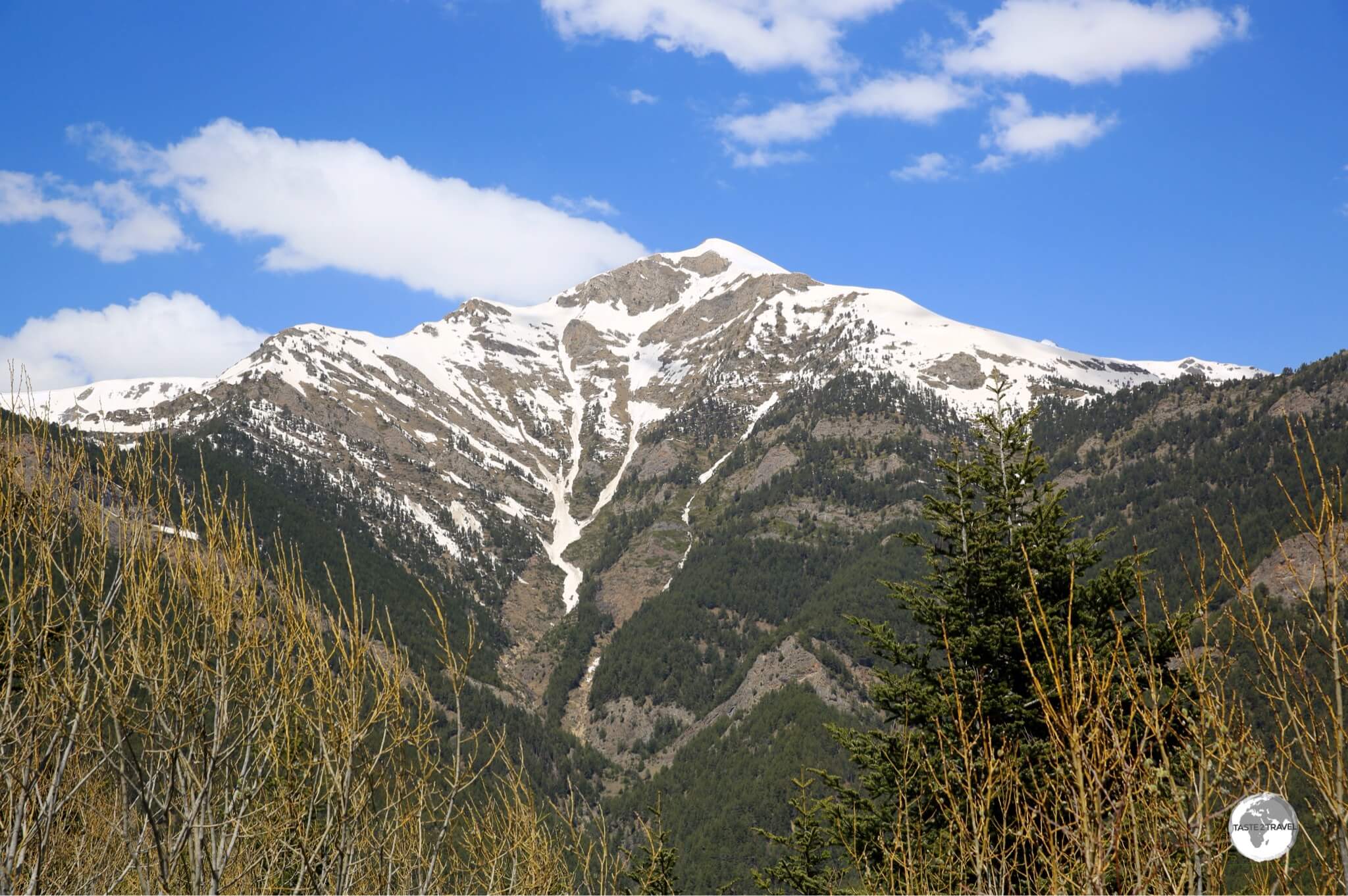
The majestic Pyrenees Mountain Range, Andorra
Andorra’s main highway crosses the country from the Spanish border to the French border in less than an hour. Along the way, it passes through Sant Julià de Lòria, Andorra la Vella, Encamp and Canillo, before reaching the French border town of Pas de la Casa.
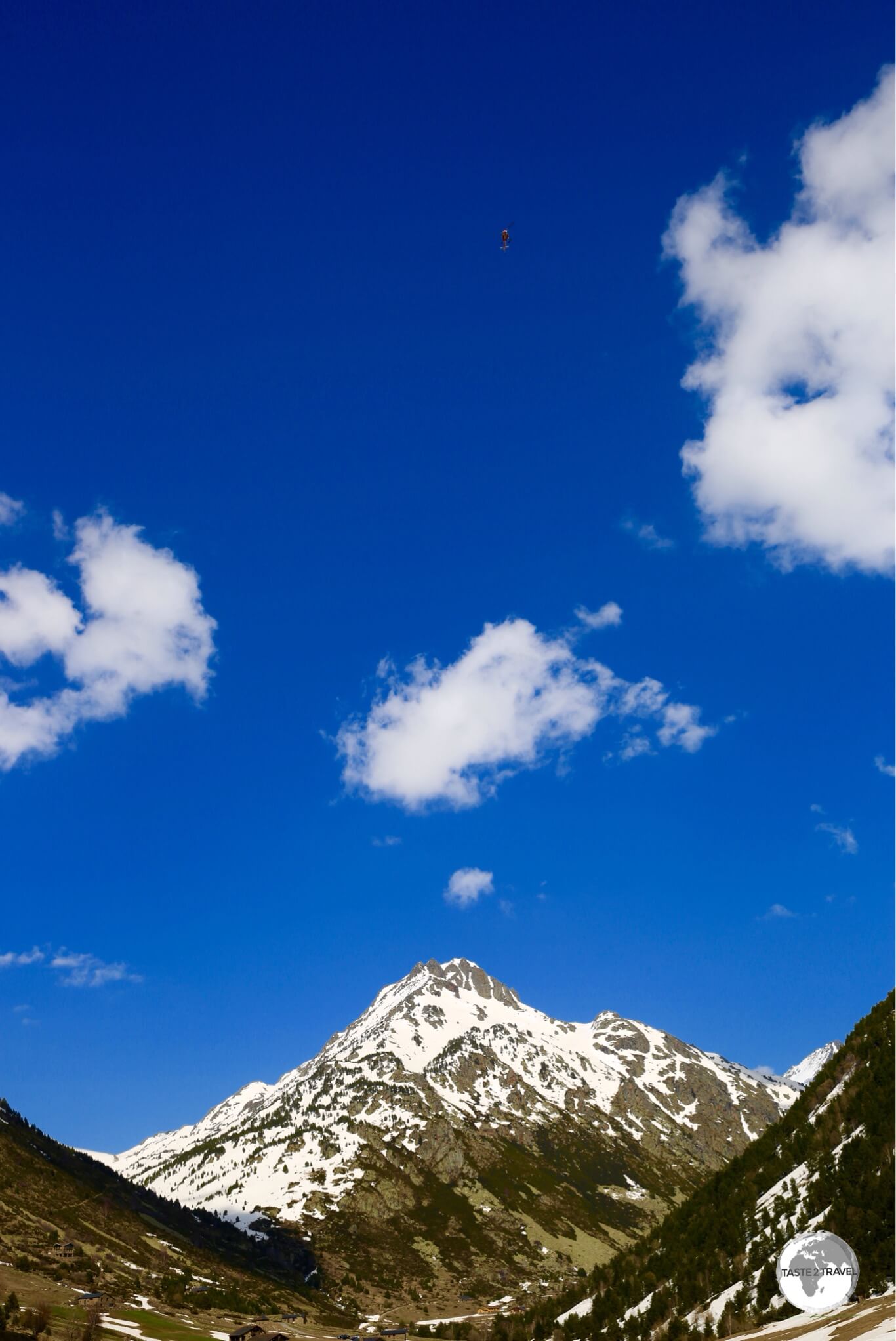
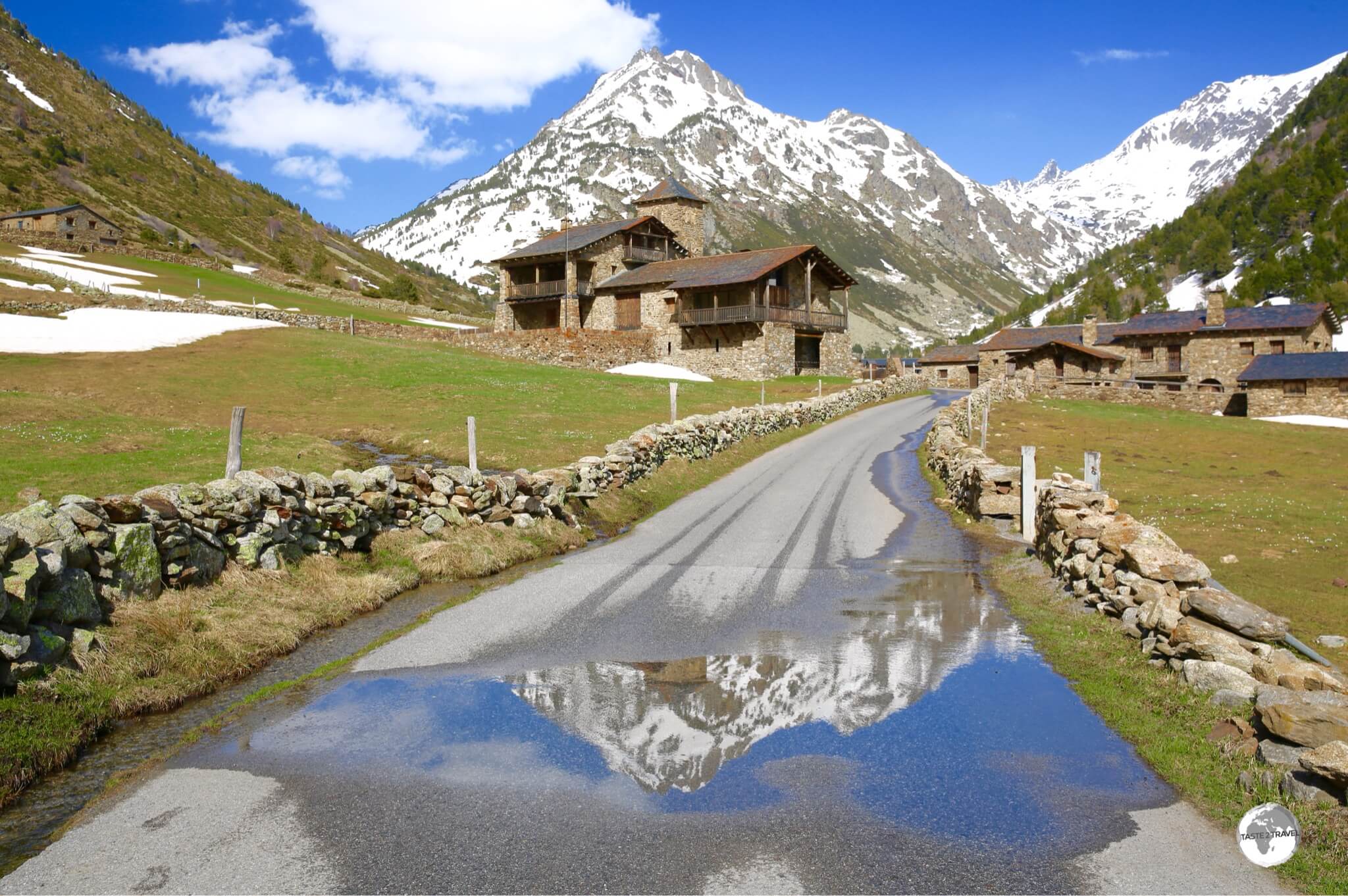
A view of the picturesque Vall d’Incles.
The main highway offers lovely views, particularly as you approach the French border. However, the smaller side roads reveal some of Andorra’s most spectacular mountain scenery.
Western Andorra
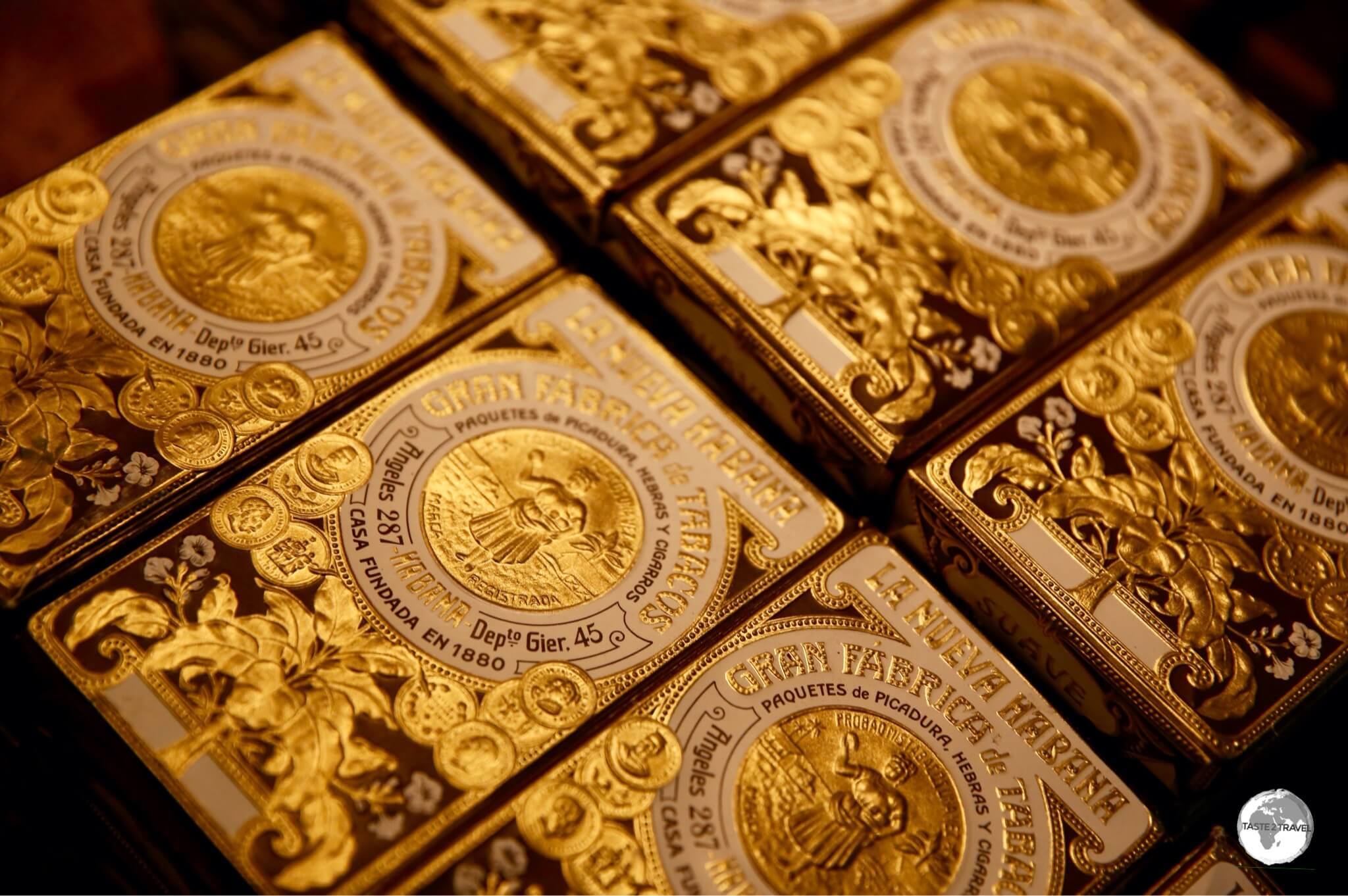
A display of opulent cigarette boxes at the Museu del Tabak in Sant Julià de Lòria.
Sant Julià de Lòria
If you enter Andorra from Spain, the pleasant town of Sant Julià de Lòria (elevation: 935 m) provides your first introduction to the country. It has useful tourist facilities, including accommodation and restaurants, as well as a charming old town.
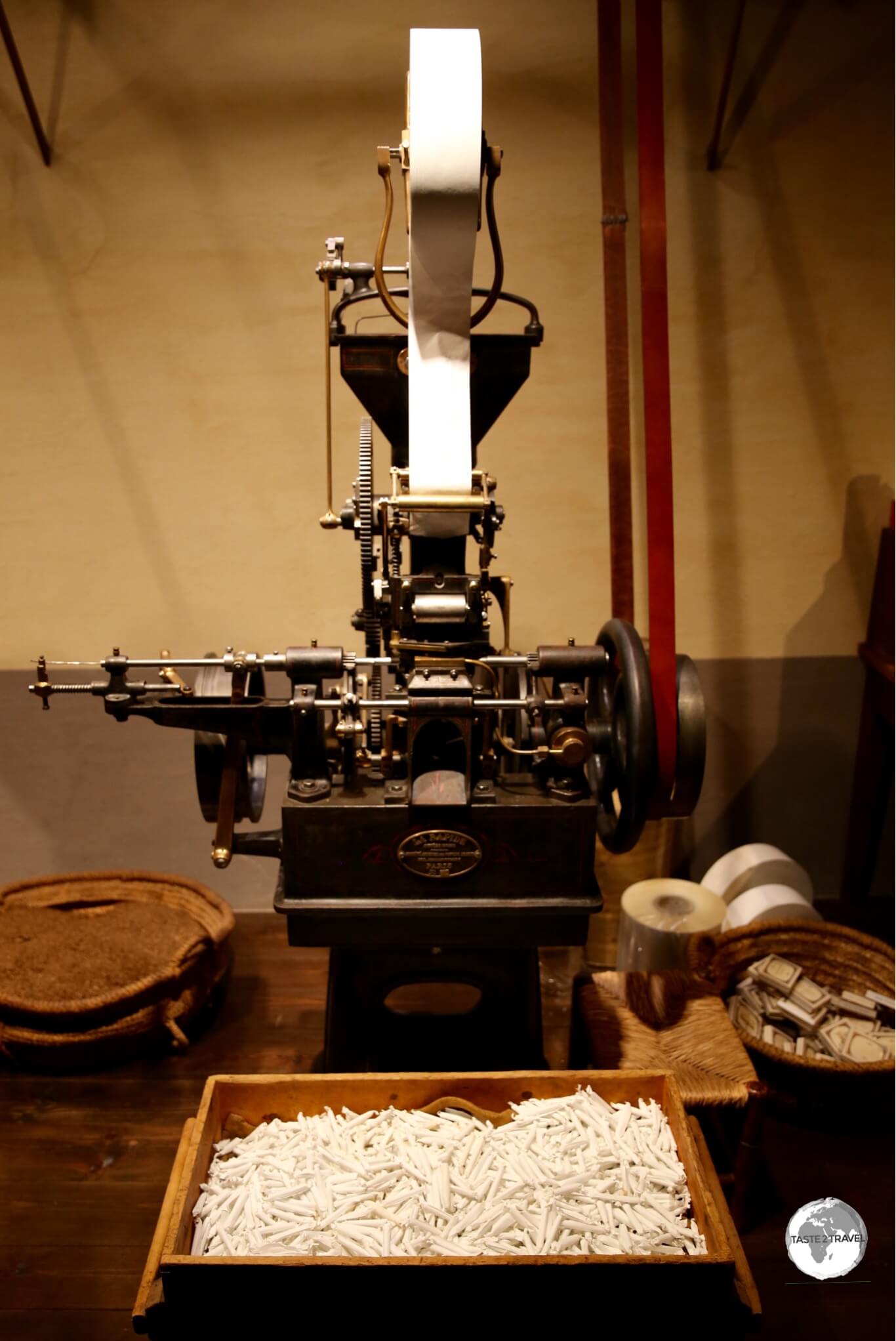
Am antique cigarette-making machine at the Museu del Tabac.
In the heart of the old town, the engaging Museu del Tabac occupies a former tobacco factory. The museum explores the history of Andorra’s tobacco industry.
A display at the Museu del Tabac.
Before tourism and financial services transformed the economy, tobacco played an important role in Andorra. Local businesses sold cigarettes in France and Spain, and smugglers also moved tobacco across the borders.
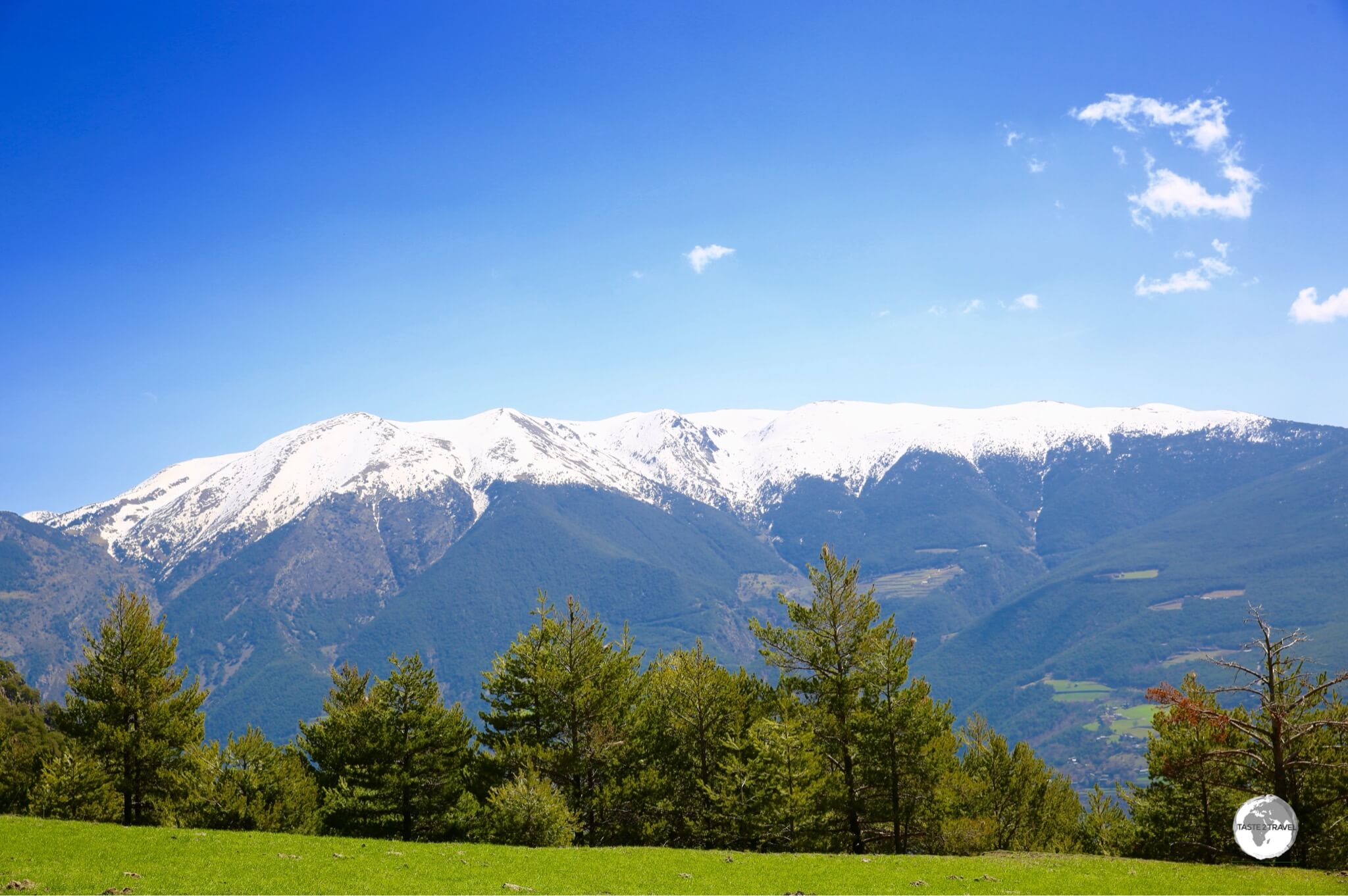
The magnificent scenery on route CS-140 as I wind my way up to the “Coll de la Gallina” mountain pass.
Coll de la Gallina
South of Sant Julià de Lòria, the scenic CS-140 road climbs 12 km towards the Coll de la Gallina mountain pass. Along the way, it gains 975 metres in elevation before reaching the pass at 1,910 m, on the border with Spain. The steep climb also features as a stage of the Tour de France. For visiting cyclists and aspiring Tour riders, this demanding route offers a serious challenge. You can read more about cycling in Andorra here.
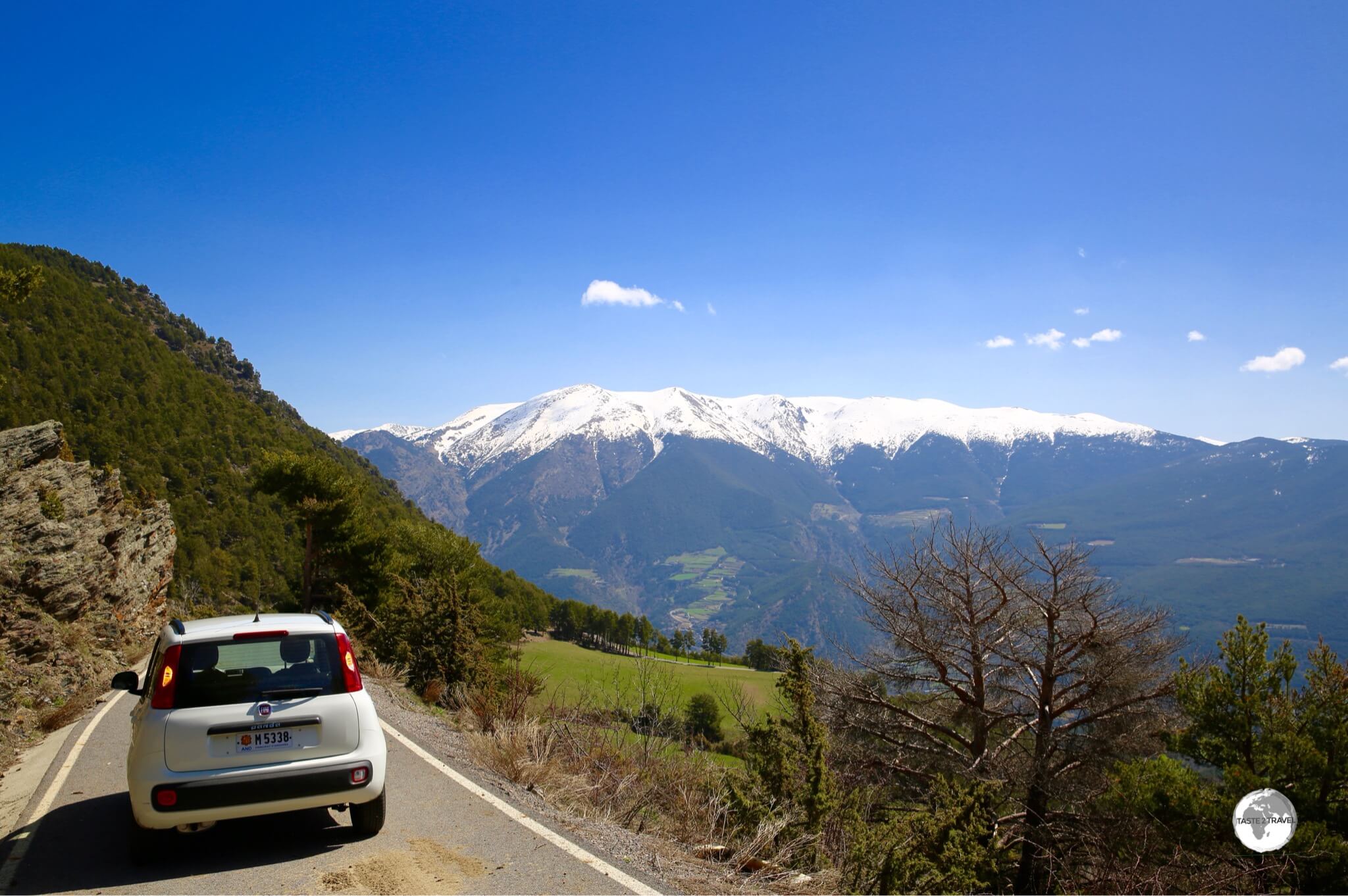
Route CS-142, a narrow, steep, one-lane and sometimes icy road which climbs up to the “Coll de la Gallina”.
Higher up, the CS-140 becomes the CS-142. The road narrows considerably and becomes a steep, one-way track with sharp drop-offs and no guard rails. Drivers who dislike heights should avoid this route. When I drove it, patches of black ice made the climb even more challenging.
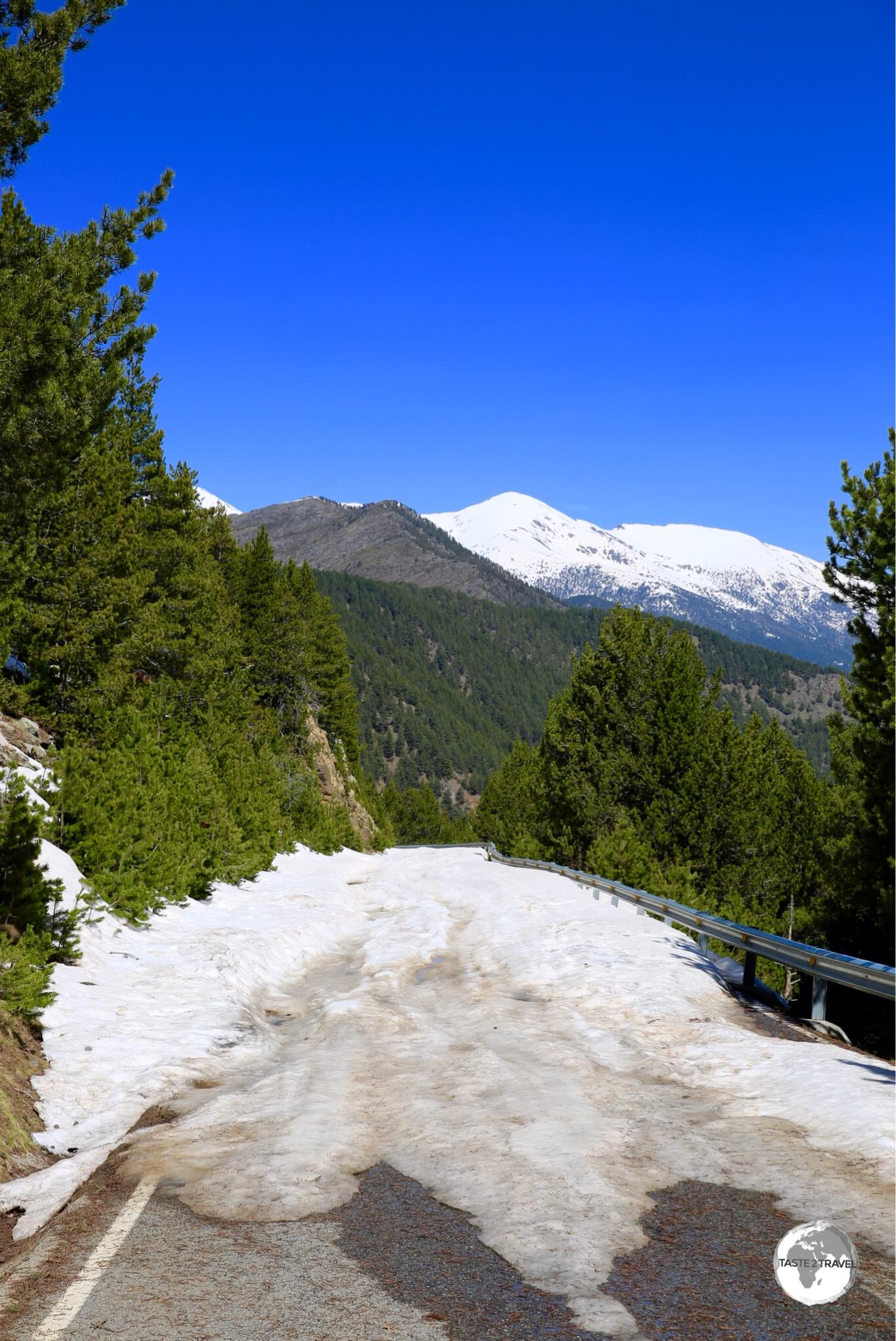
“Road Closed Ahead”. The road on the Spanish side of the “Coll de la Gallina” was impassable.
Unfortunately, the road on the Spanish side of the pass was buried under metres of snow and ice. I had no choice but to turn around and retrace my route down the narrow one-way road. Fortunately, I was the only vehicle on the mountain, so I did not meet any oncoming traffic.
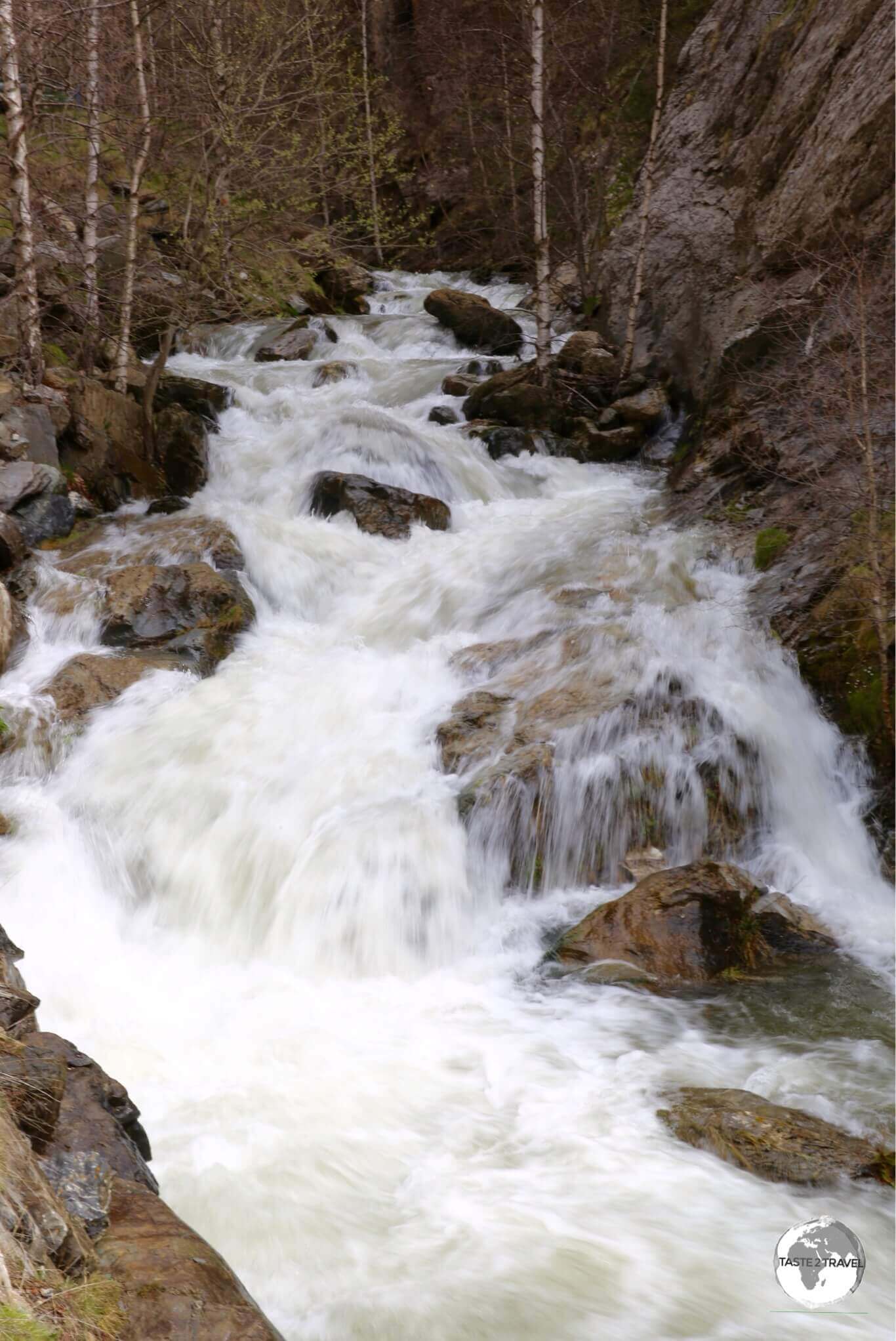
The River Os cascades down a narrow gorge alongside route CG6.
Riu d’Os
Just north of Sant Julià de Lòria, route CG6 follows the Riu d’Os through a narrow, winding gorge. The river rushes down from the mountains beside the road. CG6 connects the main highway with the Spanish border, where the road surface suddenly deteriorates, before continuing to the quiet Spanish village of Os de Civis. Interestingly, Os de Civis has no direct road connection to the rest of Spain. You can reach it only by travelling through Andorra.
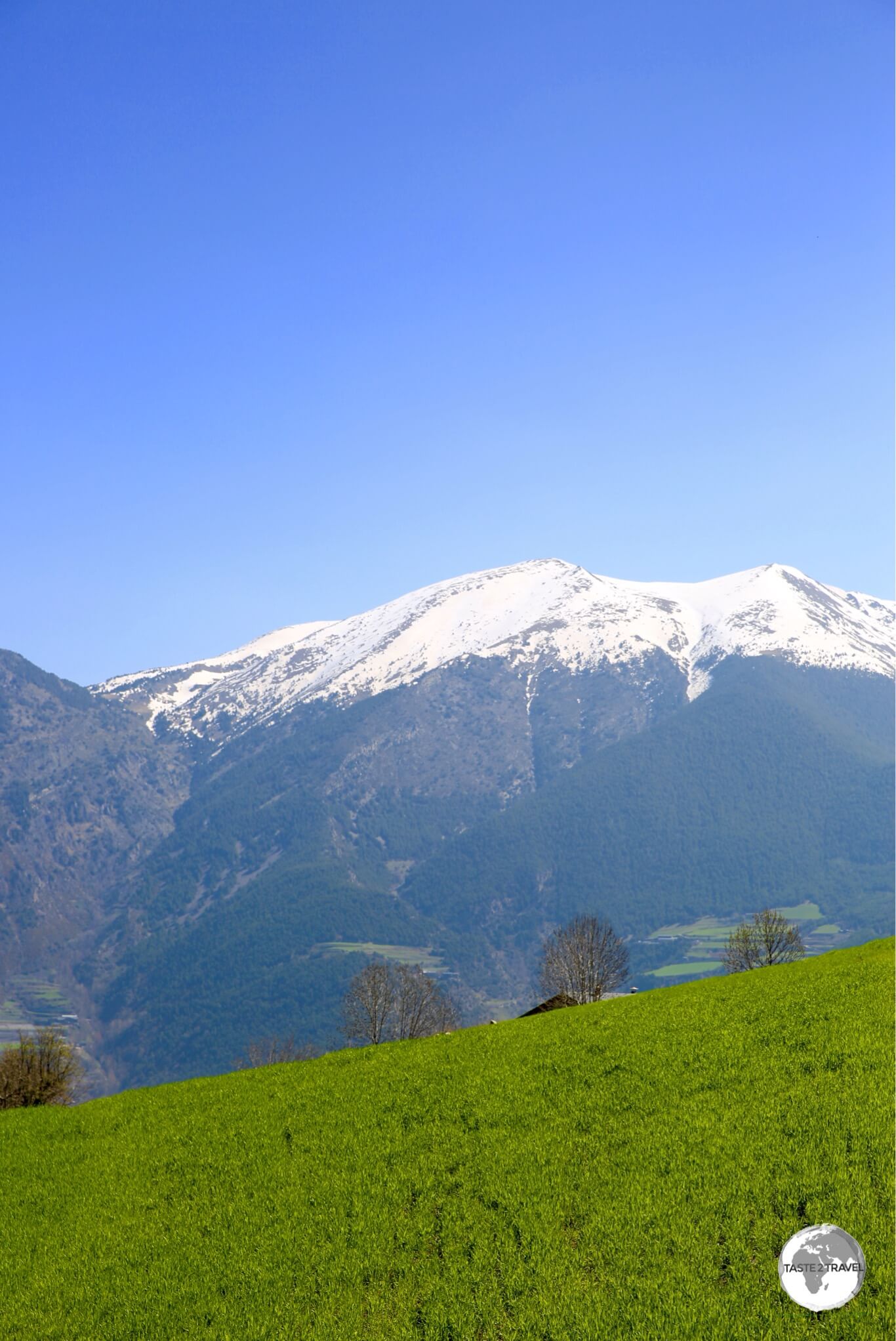
Pyrenees Mountain Range, Andorra.
Along CG6, you’ll pass through Bixessarri. Here, two narrow, winding roads climb in switchbacks up opposite sides of the valley carved by the River Os.
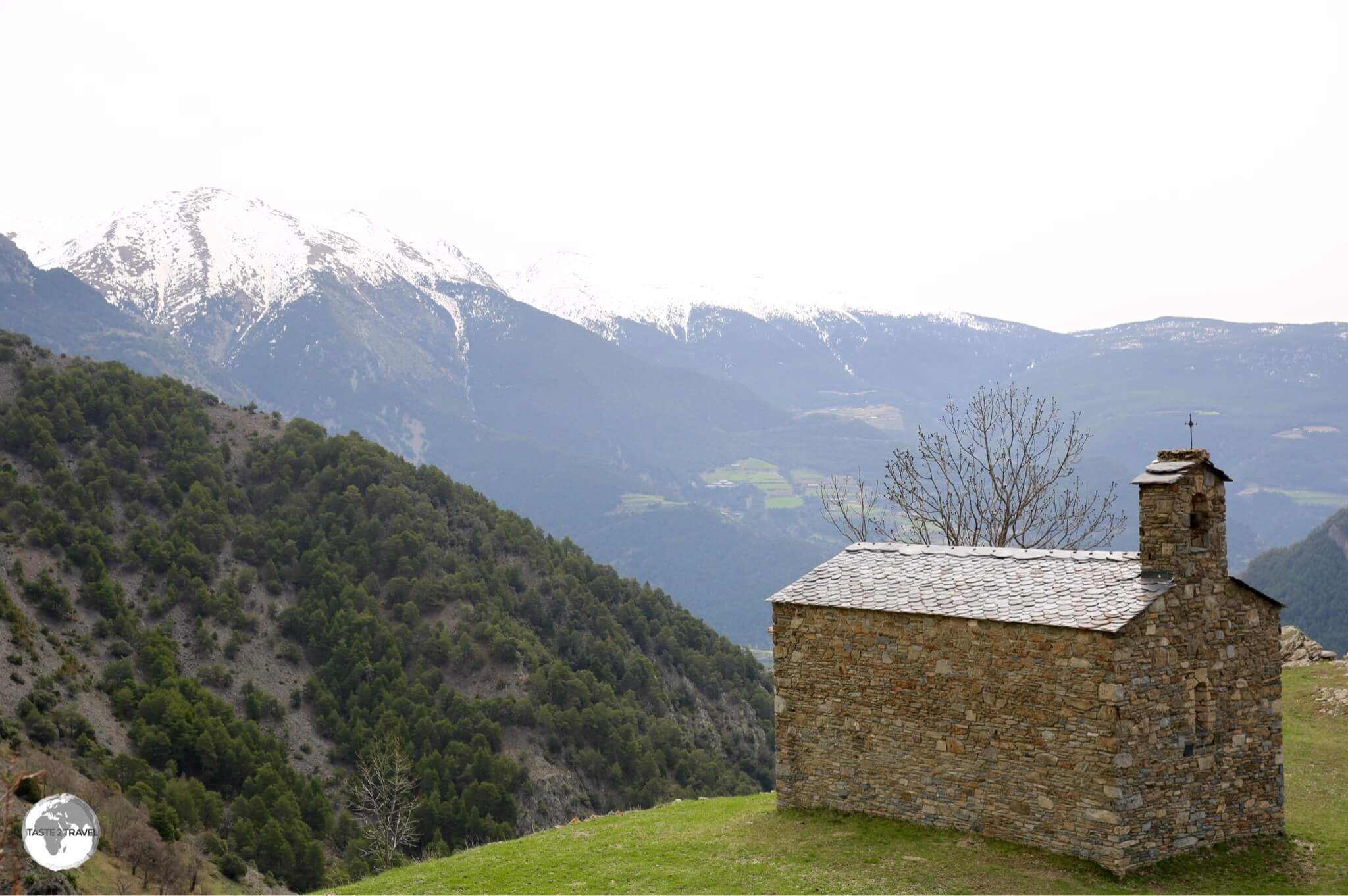
The tiny chapel of Sant Joan d’Aixàs sits atop a ridge which offers panoramic views in all directions.
Route CS-112 climbs to a ridge crowned by the small chapel of Sant Joan d’Aixàs. From here, you can enjoy magnificent views across southern Andorra. On the opposite side of the valley, route CS-111 climbs even higher and provides another way to reach Coll de la Gallina.
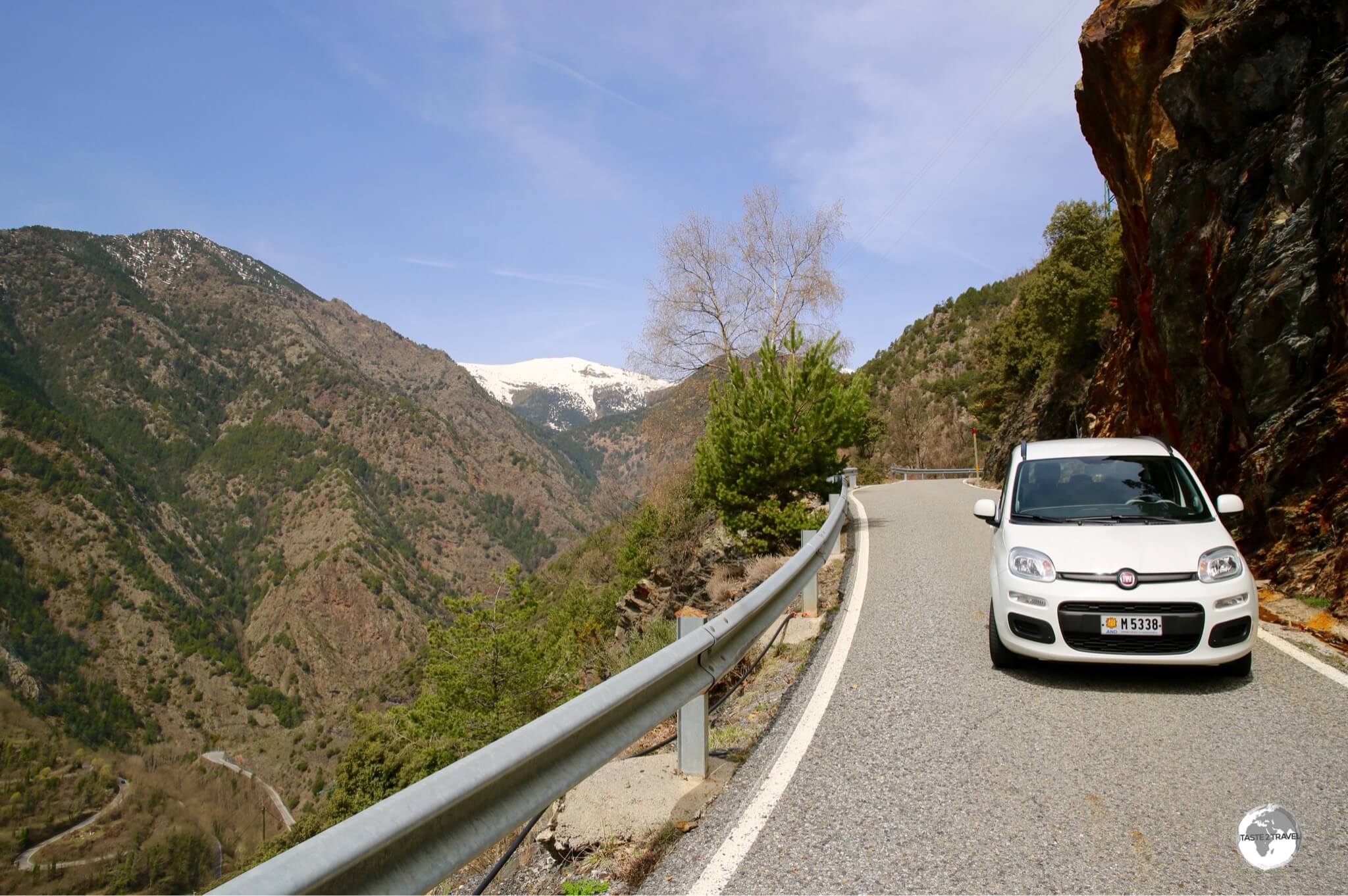
The very narrow (but two way) route CS-112.
Northern Andorra
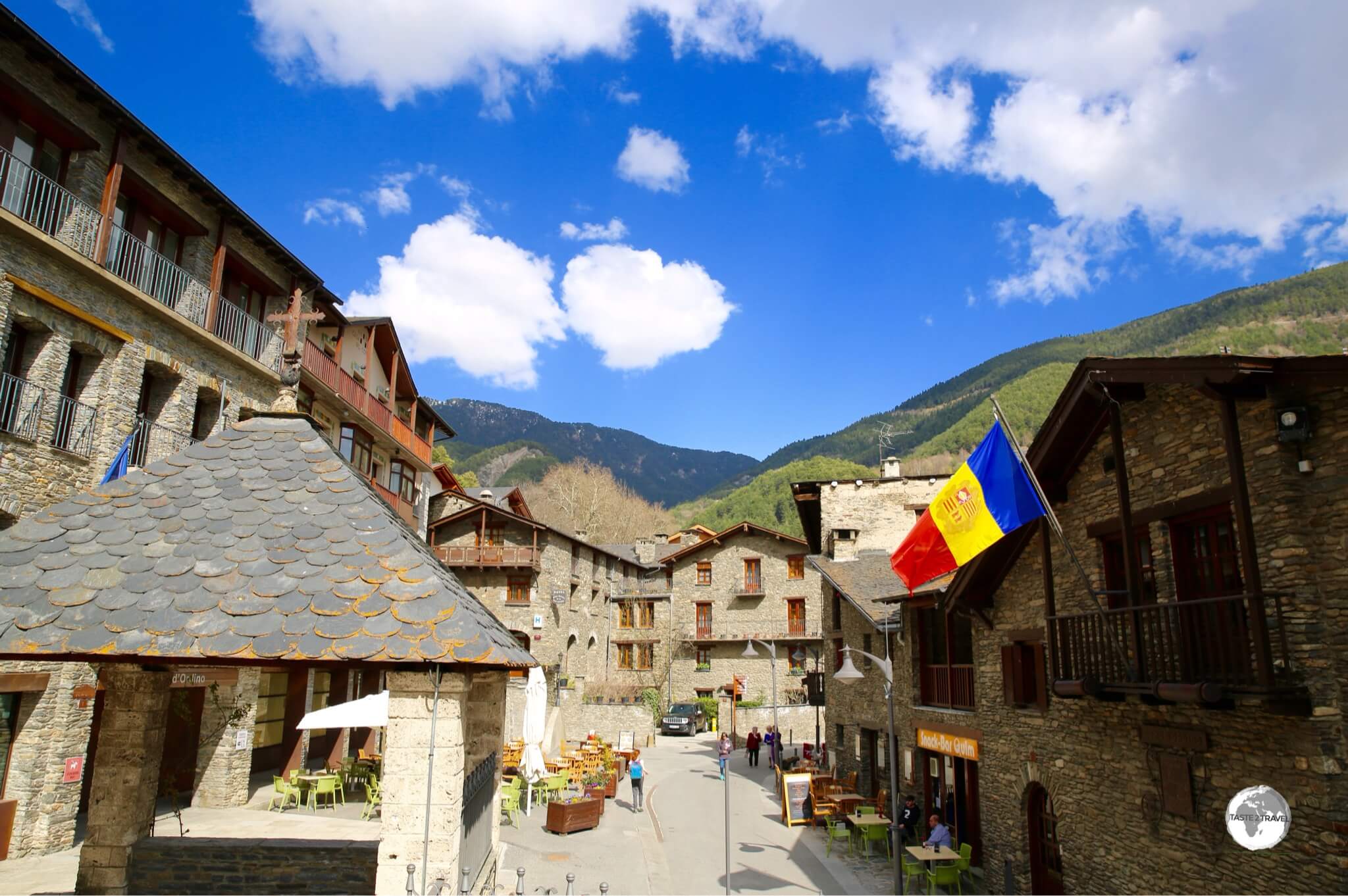
The picturesque village of Ordino.
La Massana
From Andorra la Vella, route CG3 follows a gentle valley north to the junction town of La Massana. From there, a branch road leads to the historic town of Ordino. Documents first mention Ordino in the 9th century, and today the town is regarded as Andorra’s cultural centre.
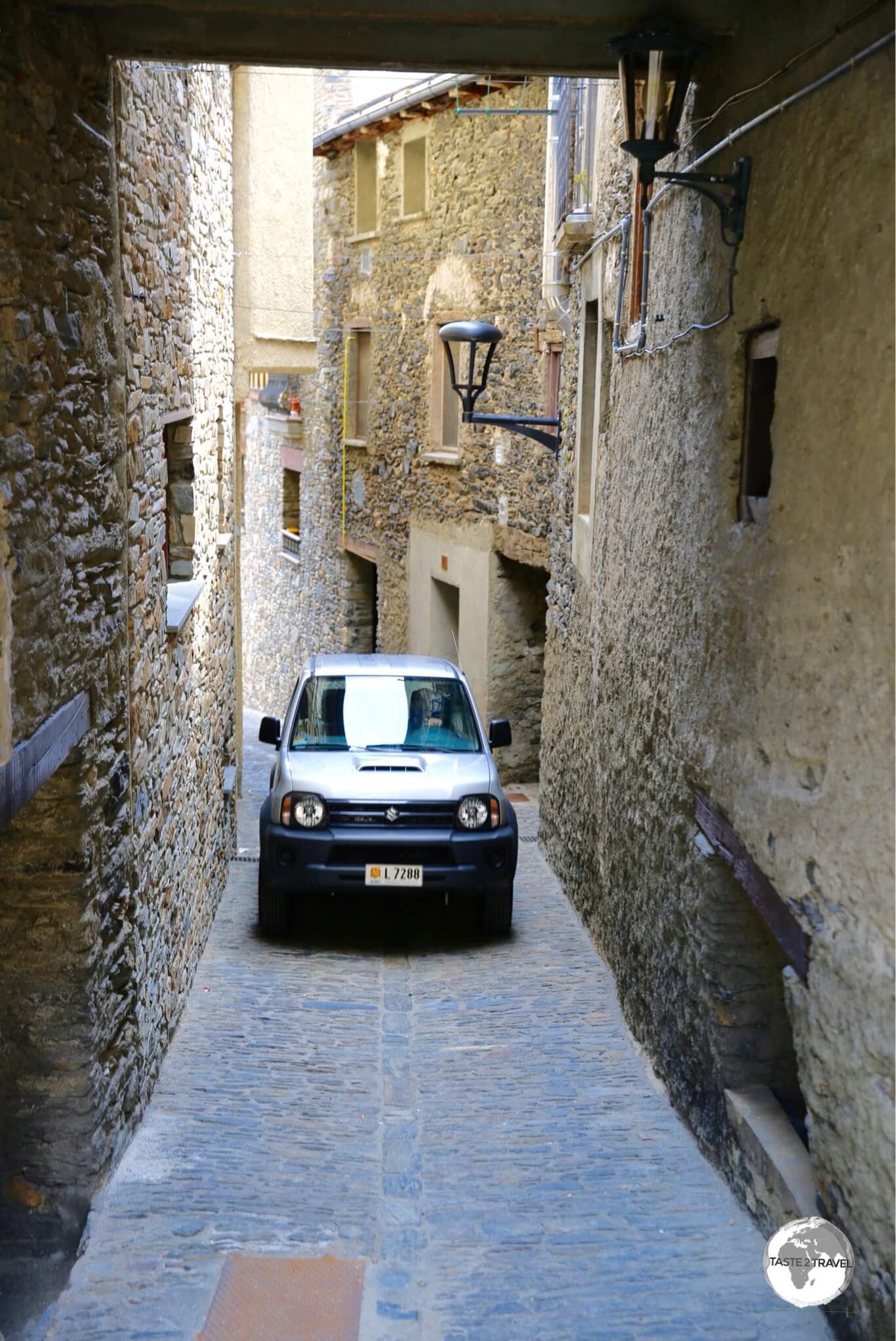
Andorran drivers are adept at driving at speed through tight lane ways such as this one in Ordino.
Ordino’s old town dates mainly from the 12th and 13th centuries. Its narrow, cobbled streets make for a pleasant walk. Local drivers clearly know how to handle tight spaces, as I watched cars negotiate the lanes with surprising confidence.
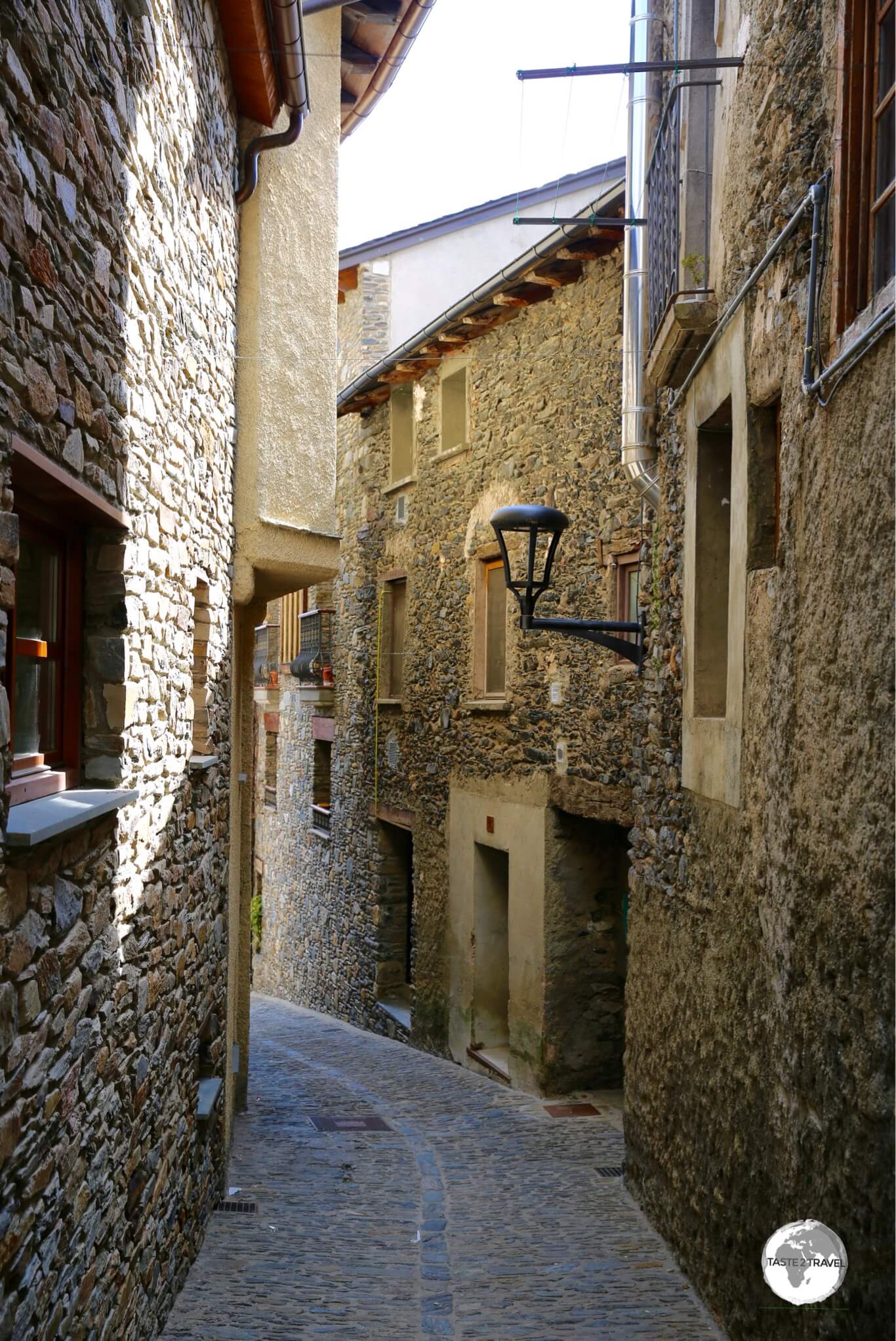
The narrow lane ways of Ordino village.
Ordino also makes a popular base for skiing in the Vallnord region. The town offers plenty of accommodation and restaurants, too.
La Cortinada
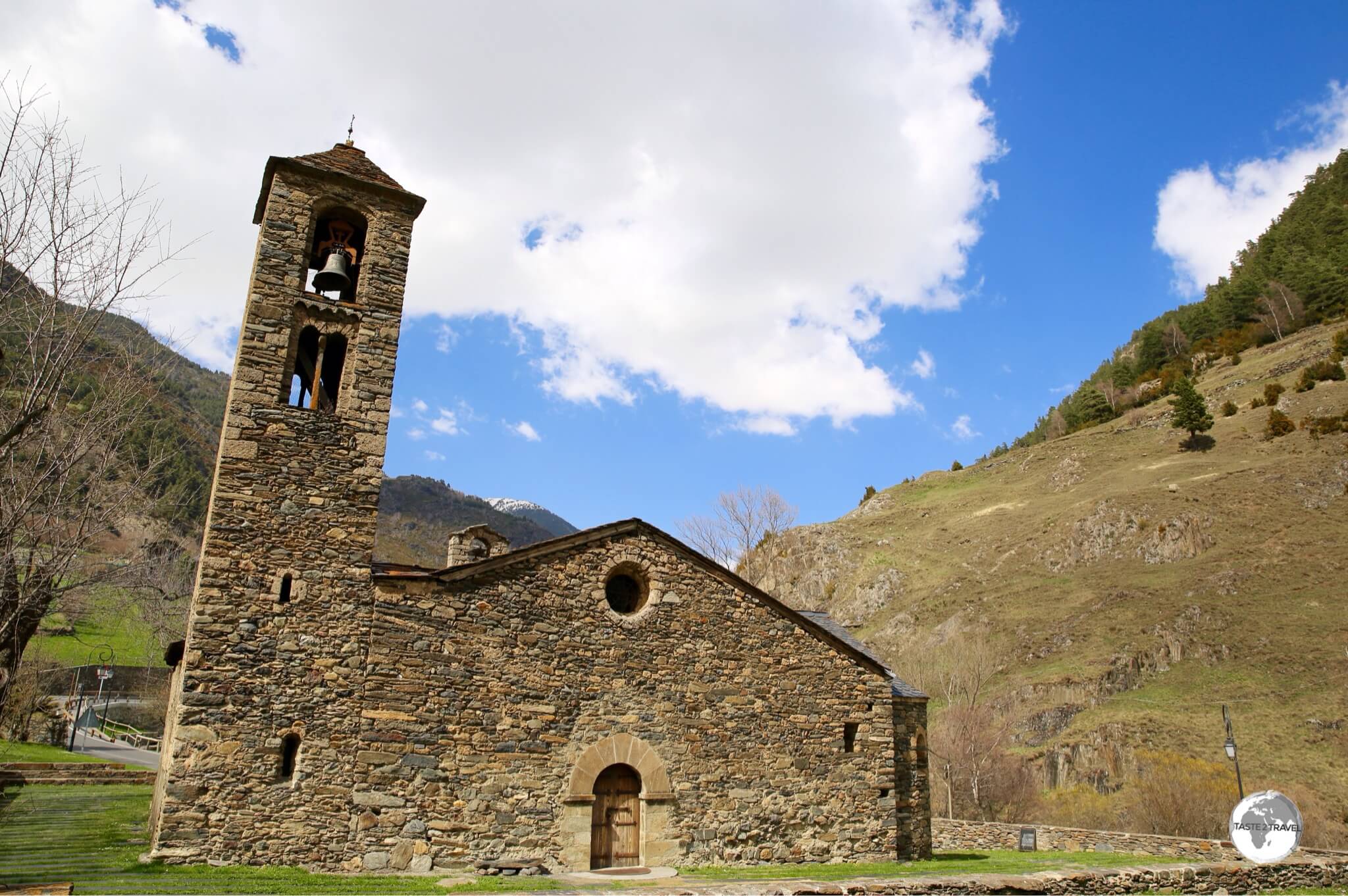
The Església de Sant Martí de la Cortinada was originally built in the 11th century.
Continue north along CG3 from Ordino and you’ll soon reach La Cortinada. The village’s main landmark is the beautiful Església de Sant Martí de la Cortinada. Builders first constructed this stone church in the 11th or 12th century, then rebuilt it in the 17th century.
Vallnord Ski Resort
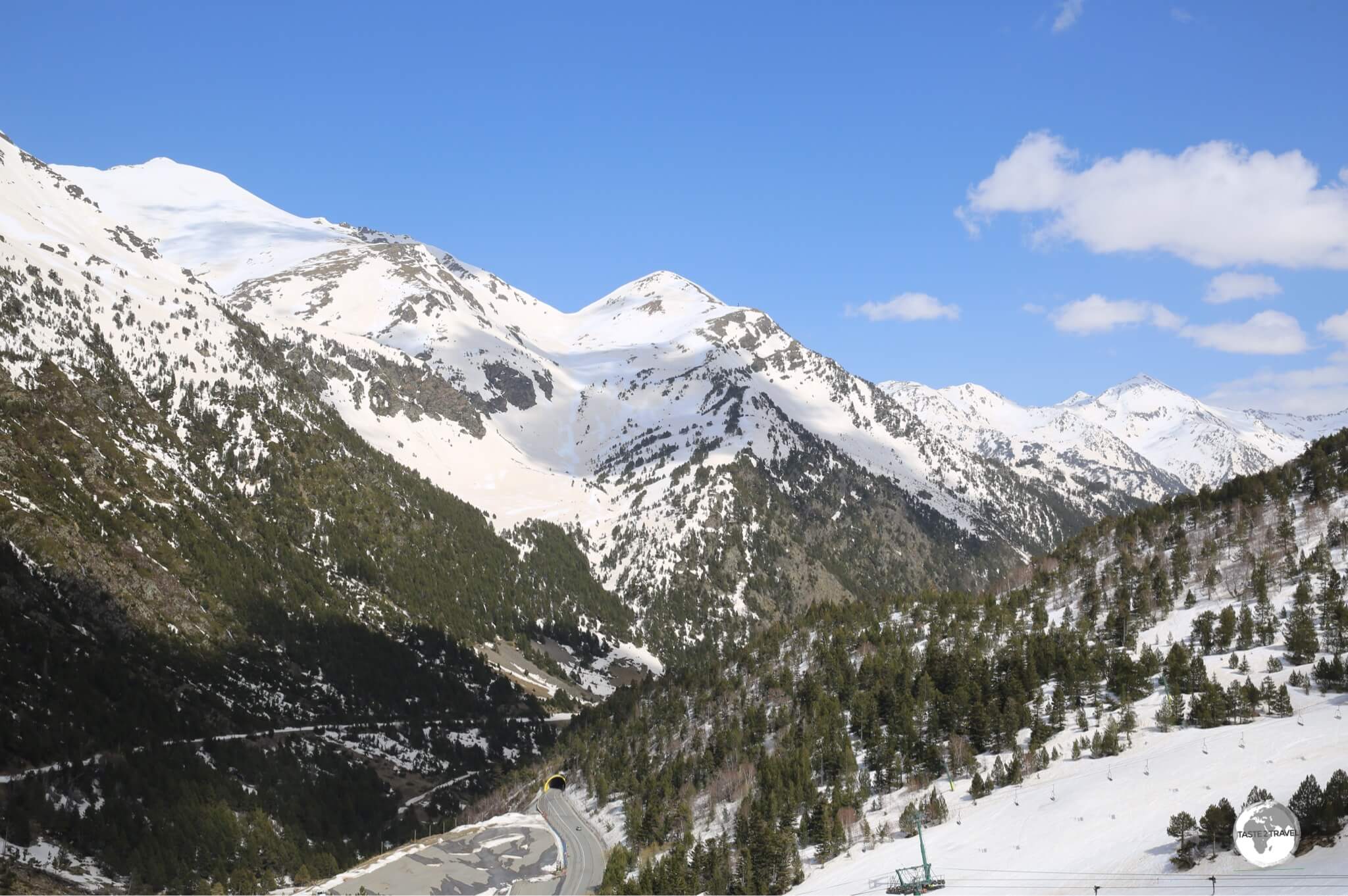
A panoramic view from the Arcalis ski resort (the road tunnel can be seen below).
Farther up the valley, CG3 becomes CS-380. The road then climbs steeply through a series of hairpin bends, passes through a tunnel and reaches the chairlift station at the Vallnord Arcalís ski resort.
The Vallnord ski area comprises three resorts, listed here from north to south:
Chairlifts link Arinsal and Pal, while Arcalís operates as a separate resort.
Pal
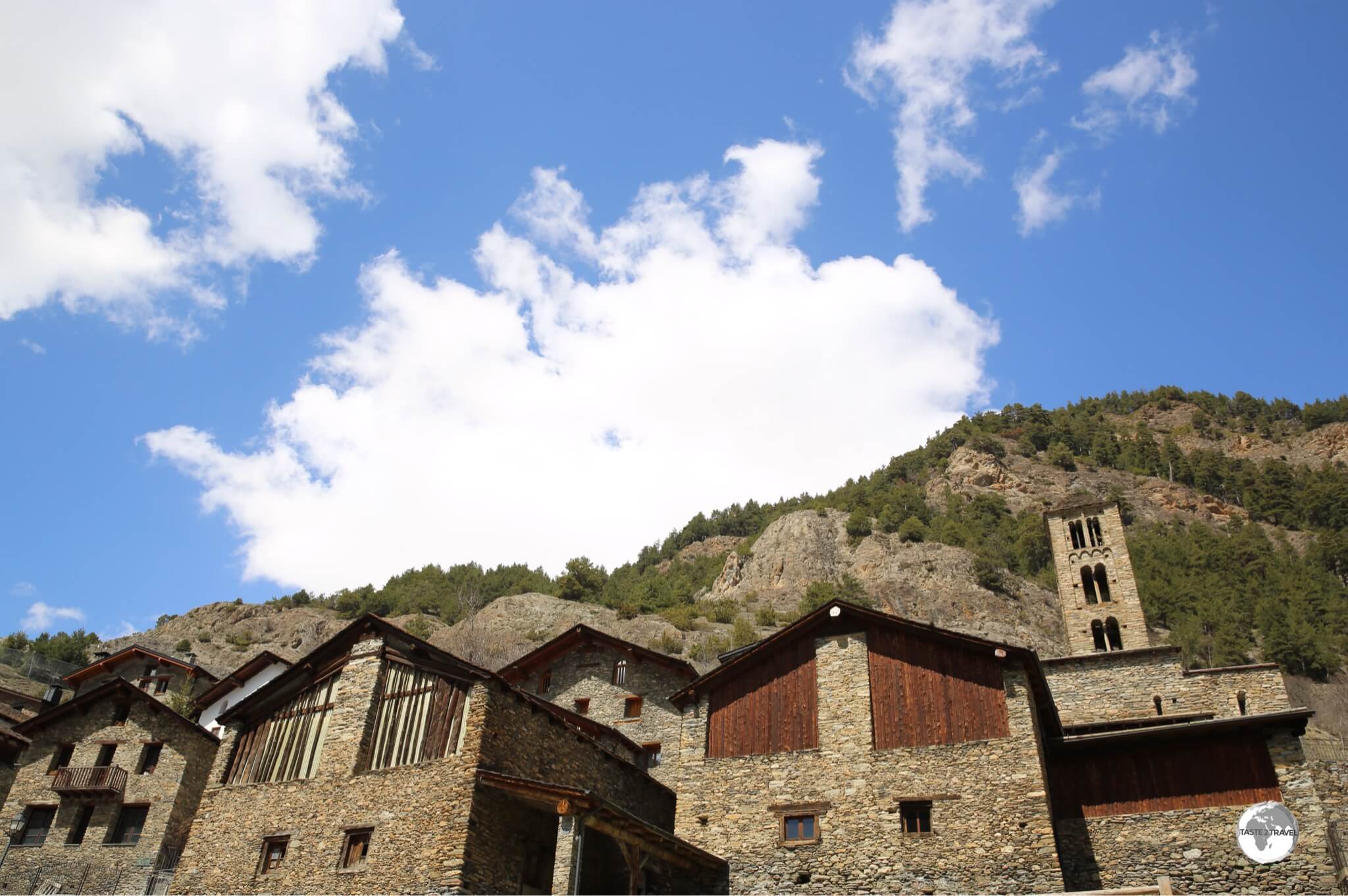
The historic village of Pal.
Back in the junction town of La Massana, route CG4 leads to the linked ski resorts of Arinsal and Pal. On the way to Pal, the road passes through the charming historic village of the same name. With a population of only 235, Pal is well worth a stop before you continue climbing towards the Pal ski resort.
Port de Cabús
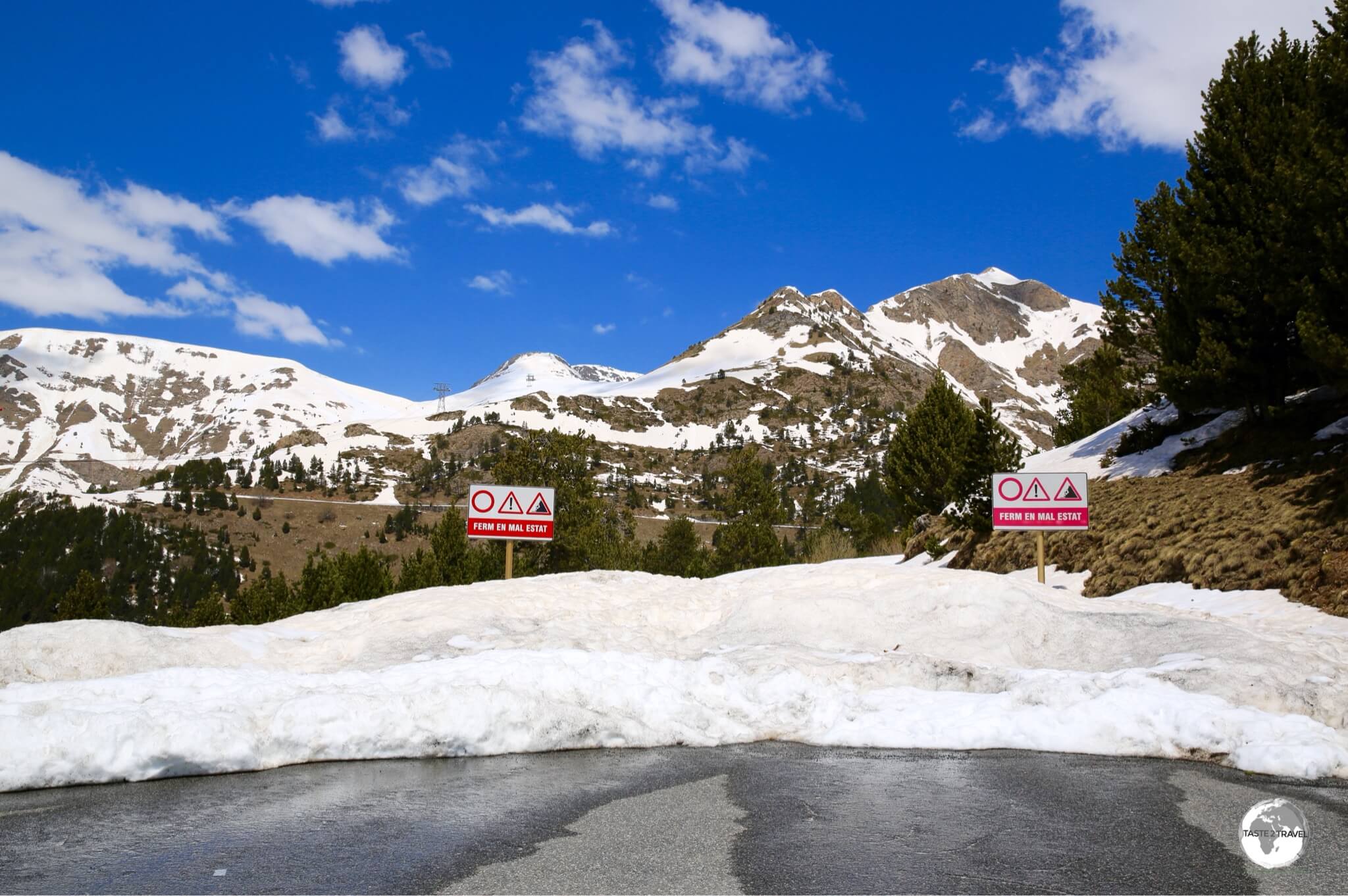
“No Through Road” – the road on the Spanish side of Port de Cabús was impassable.
The climb continues beyond Pal to Port de Cabús, a mountain pass at 2,302 m that marks the Spanish border. An unmaintained road continues into Spain. During my visit, however, thick snow and ice made it completely impassable.
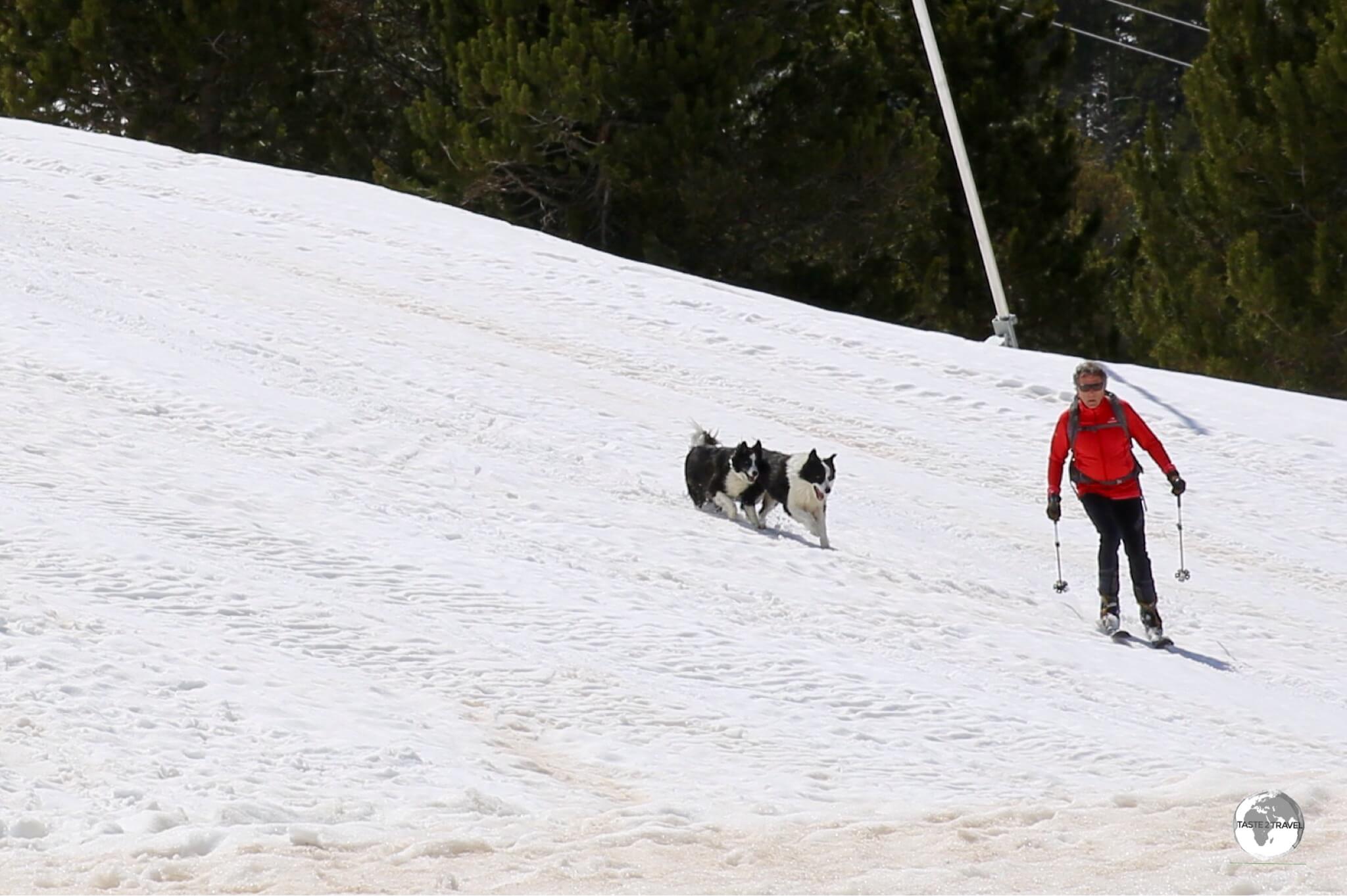
A novel way of walking the dogs at the Pal ski resort.
At Erts, route CG5 branches off CG4 and climbs towards the lofty Arinsal ski resort. This spectacular alpine drive offers more sweeping views as the winding road negotiates a series of hairpin bends before ending at the resort, which sits at an elevation of 1,900 m.
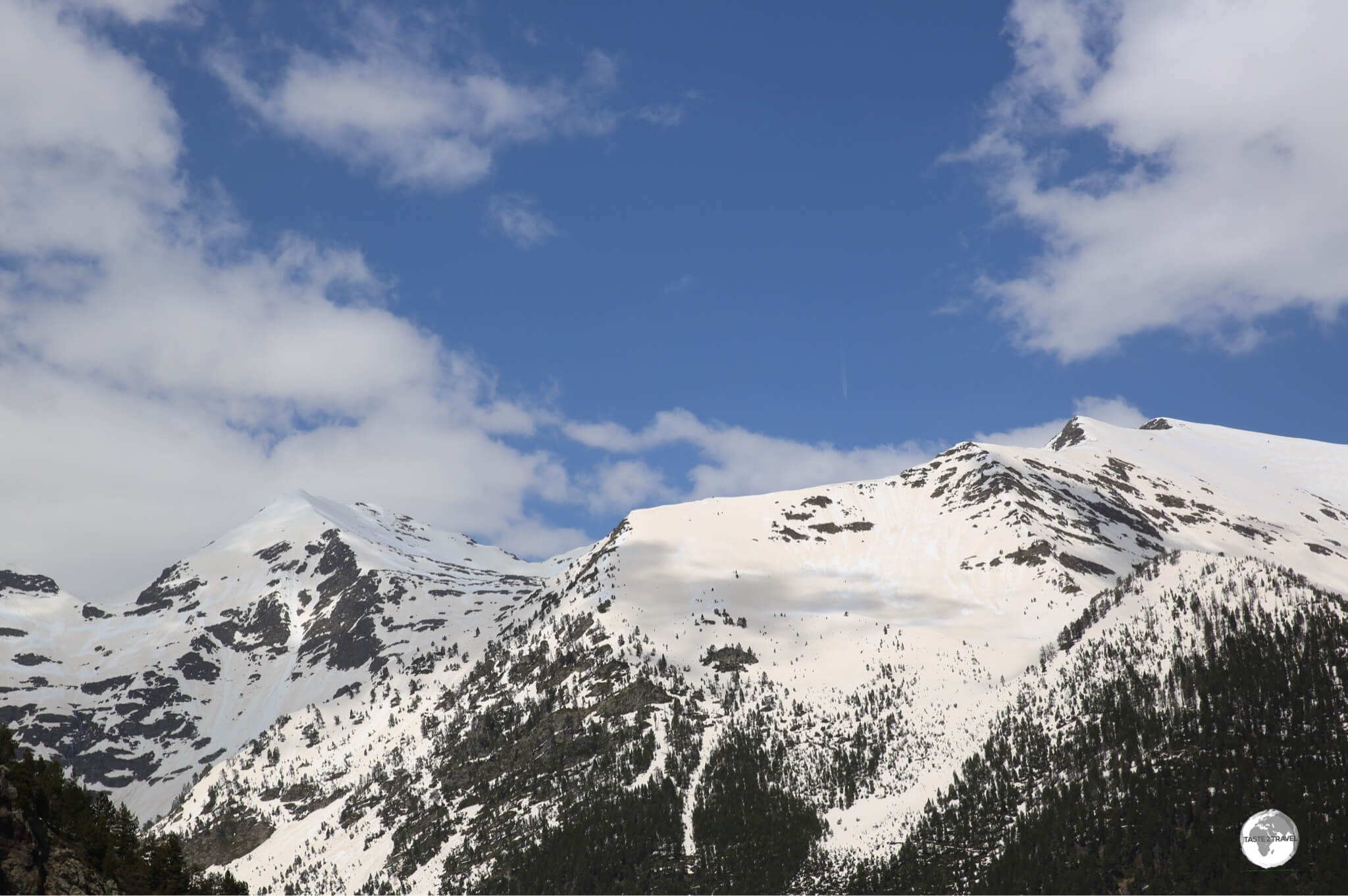
More incredible views – this time from the Arinsal ski resort.
Eastern Andorra
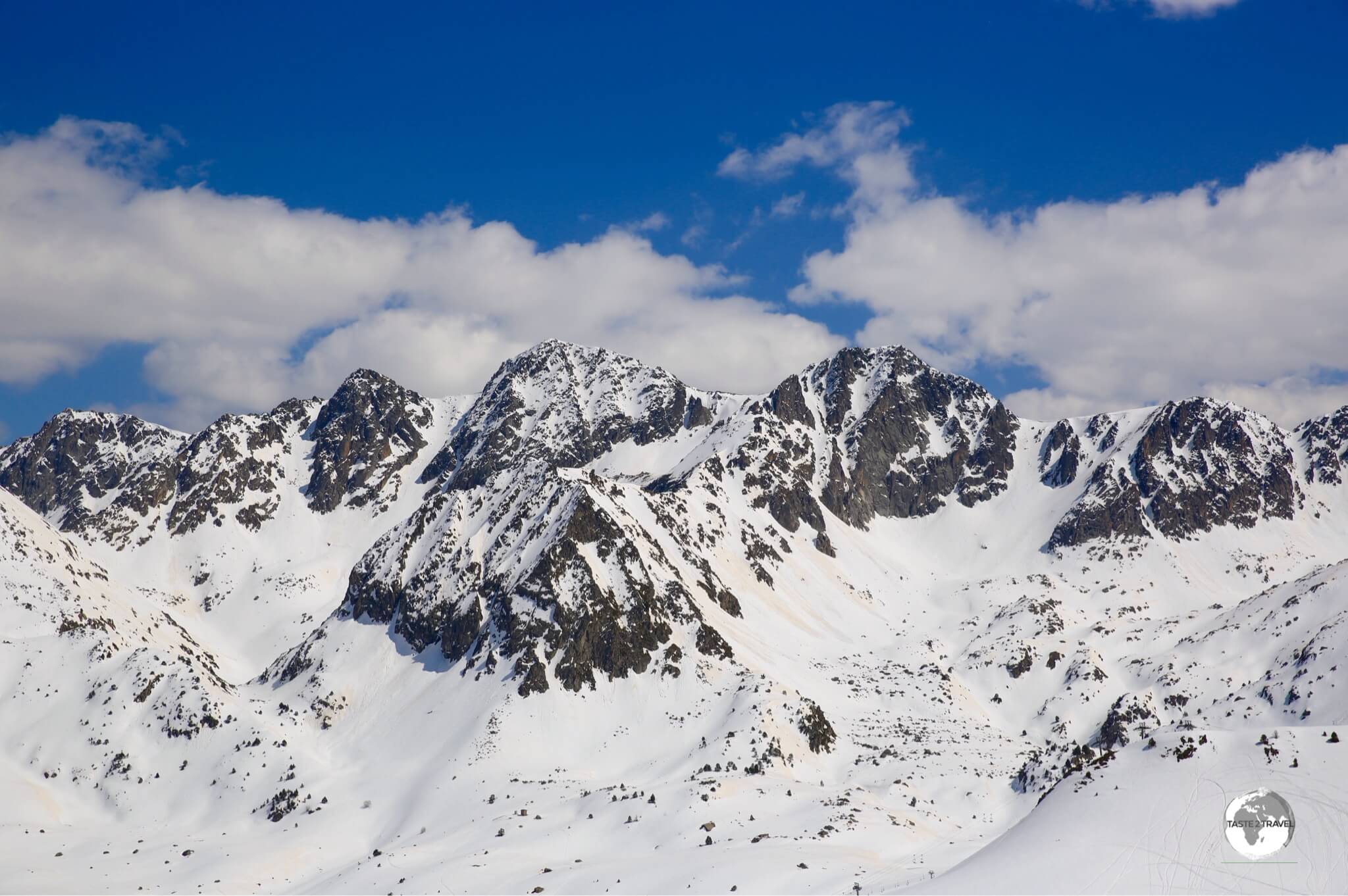
Majestic peaks line route CG2 near the French border.
East of Andorra la Vella, highway CG2 passes through the busy towns of Encamp and Canillo. Farther along, you can choose between the scenic high road and a tunnel through the mountain to the border town of Pas de la Casa. I recommend the high road: the views from the mountain pass are spectacular. However, if you’re short on time, the tunnel offers a much quicker route.
Pas de la Casa
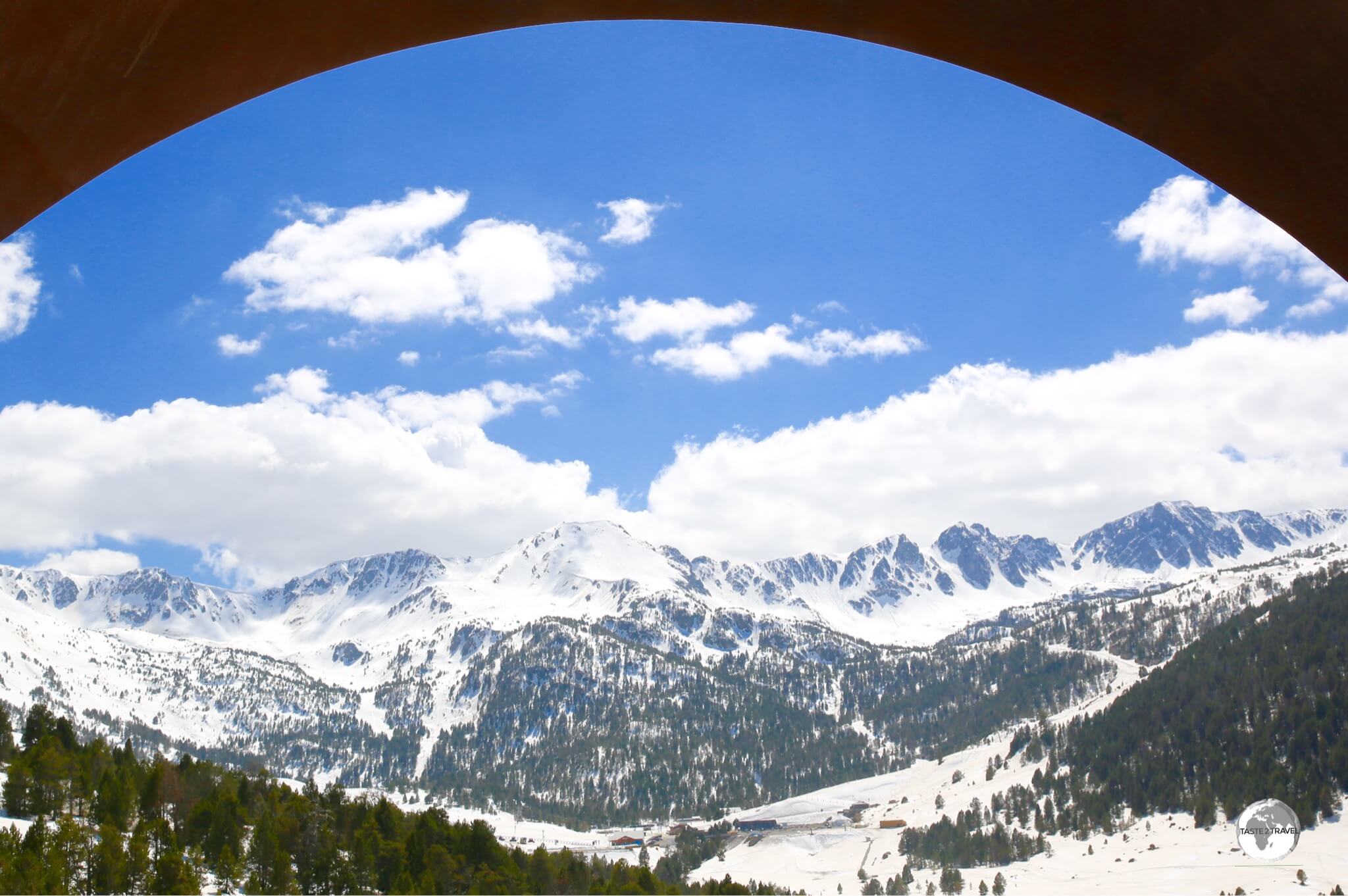
“A window onto the world” – a view from route CG2 on the way to Pas de la Casa.
Although Pas de la Casa sits in a beautiful valley surrounded by towering peaks, the town mainly caters to French day-trippers seeking duty-free bargains. The narrow Ariège River marks the border and runs through the town centre. On the outskirts, huge petrol stations attract French motorists who cross the border to buy cheaper fuel.
Vall d’Incles
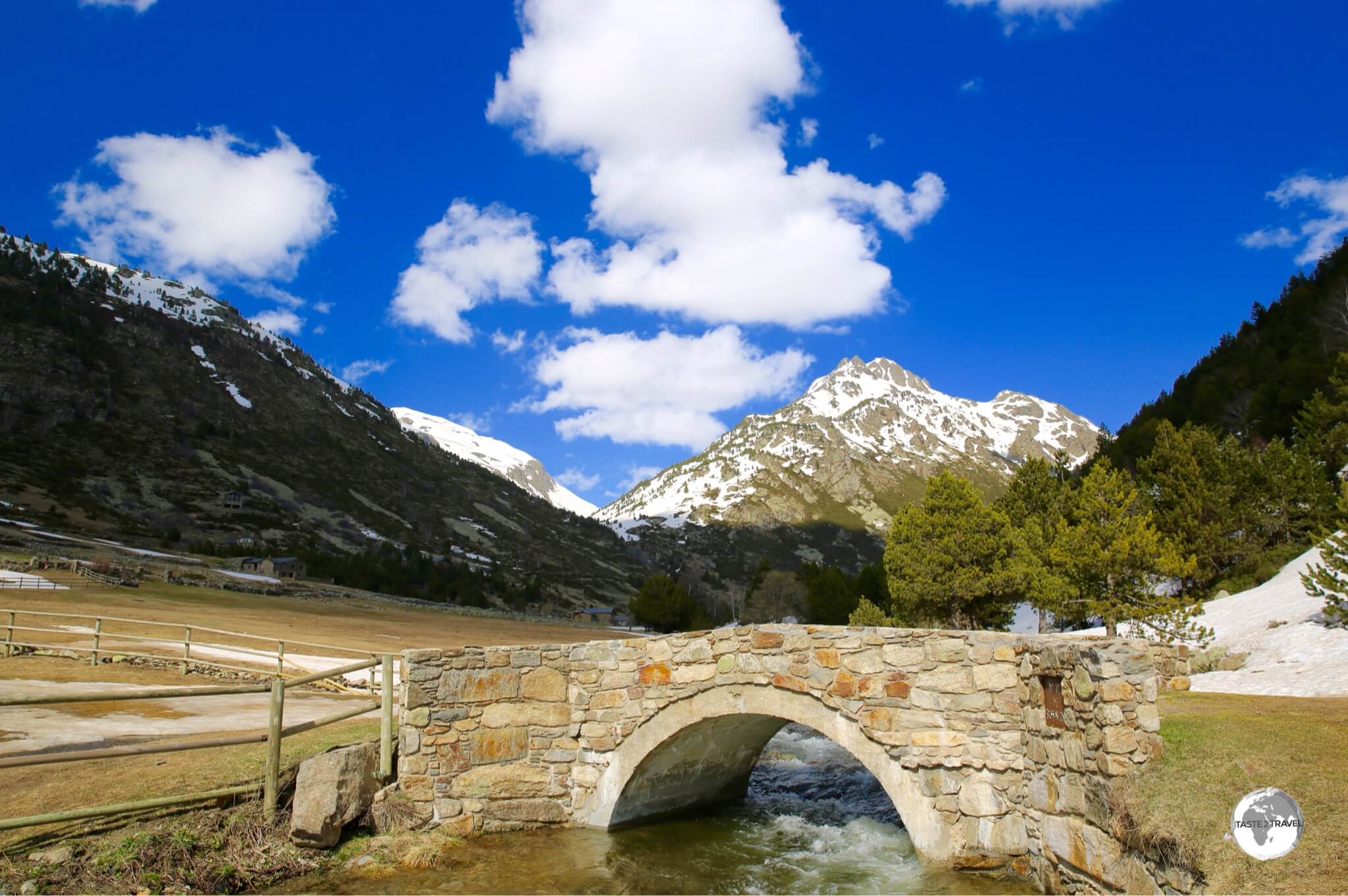
A stone bridge crosses the River Incles in the pretty Vall d’Incles.
For a worthwhile side trip, follow the narrow country road beside the River Incles (Riu d’Incles) into the picturesque Vall d’Incles. You’ll find the turn-off between El Tarter and Soldeu. From there, a narrow two-way road leads into this charming valley.
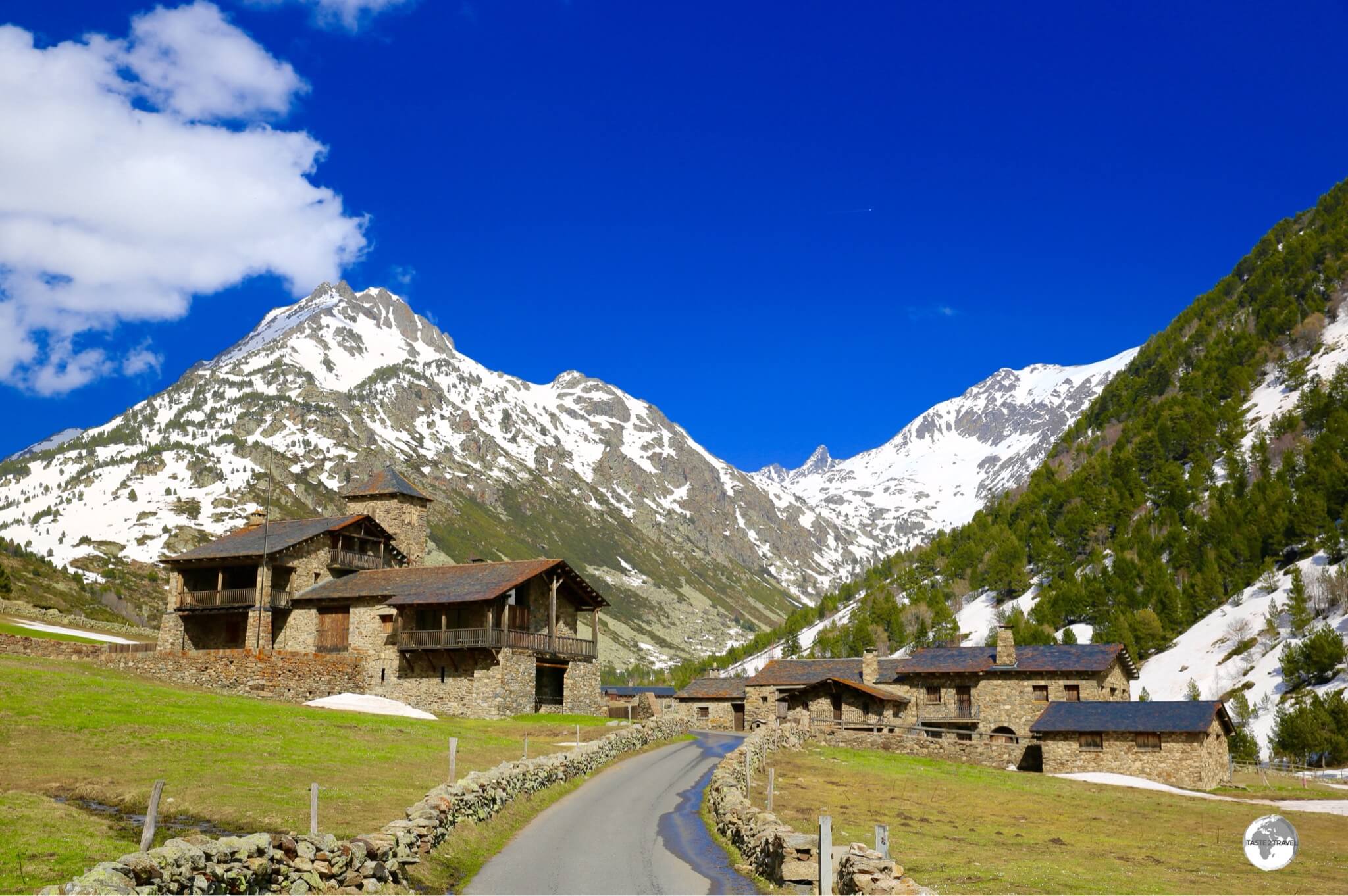
The picture-postcard perfect Vall d’Incles.
Accommodation
Andorra offers more than 300 accommodation properties, ranging from budget hostels to five-star hotels. You’ll find places to stay throughout the country, although the capital has the greatest choice. The accommodation directory on the Visit Andorra website provides a useful starting point.
During my stay in Andorra la Vella, I chose the mid-range Hotel Festa Brava. At €54 per night, it offered comfortable rooms at a reasonable price in the heart of the old town. Restaurants, cafés, bars, the main shopping street and most attractions were all within easy walking distance.
Parking in the capital is scarce, but the hotel has an arrangement with the nearby Centre Comercial Pyrénées car park. Guests can therefore park overnight at a 50% discount.
Eating Out
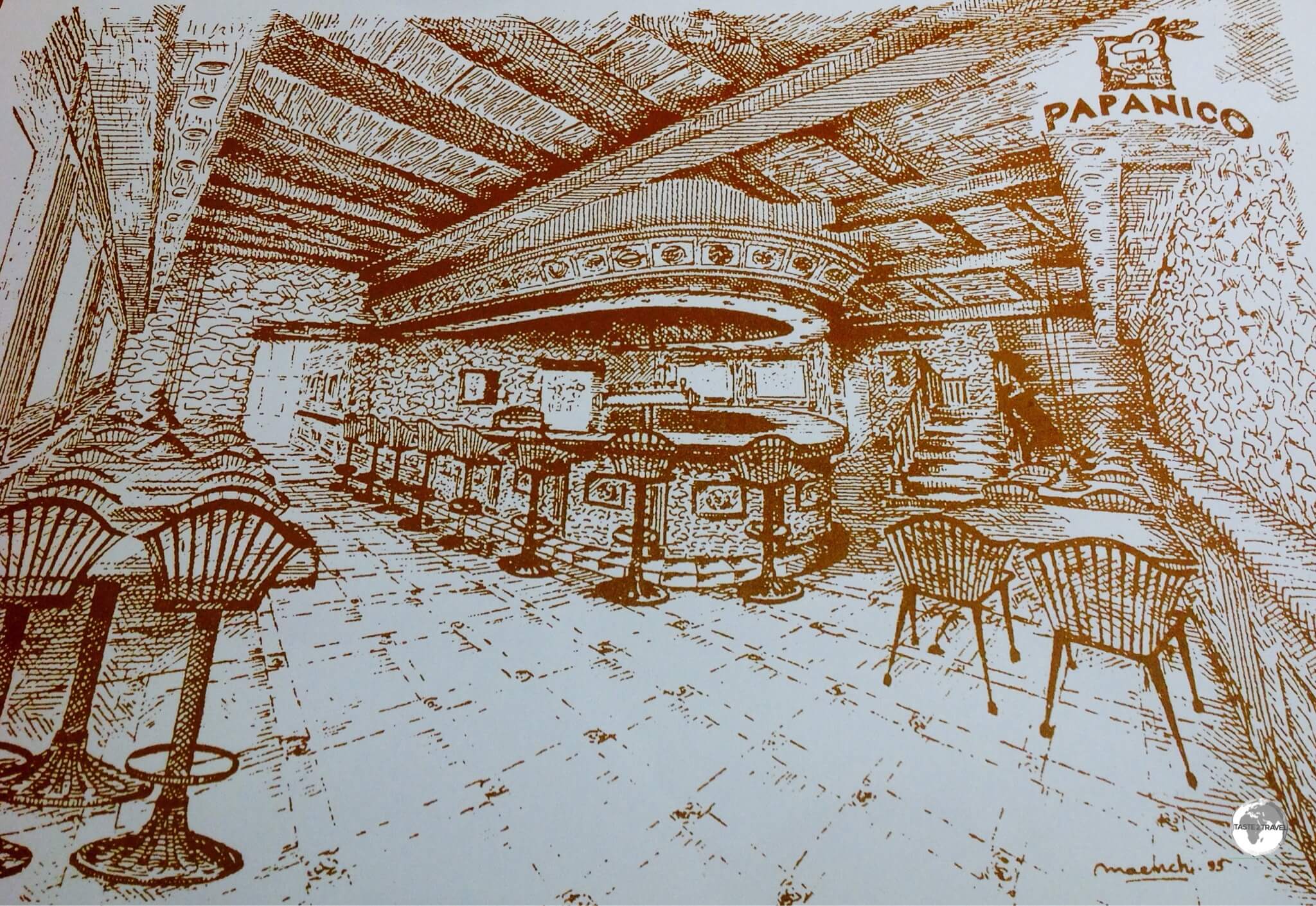
Artwork at the Papanico restaurant which is located in the heart of Andorra la Vella.
Andorra has around 400 restaurants. Since France and Spain are both renowned for their food, it is no surprise that the country offers plenty of excellent dining options, particularly in the capital. However, you don’t need to spend a fortune to eat well. Many modest cafés serve tasty three-course fixed-price menus for less than €15. Visit the Eating section of the Visit Andorra website for an introduction to Andorran cuisine and a useful restaurant directory.
Cafeteria La Terrassa
I usually has breakfast at Cafeteria La Terrassa, on the third floor of the Centre Comercial Pyrénées shopping mall in downtown Andorra la Vella. The café opens seven days a week and serves sweet and savoury crêpes, French pastries, freshly squeezed Valencia orange juice and excellent strong coffee.
Hostal & Pub Barri Antic
My favourite bar in Andorra la Vella was the lively Hostal & Pub Barri Antic, opposite the Parliament building in the old town. The pub attracts cyclists and other travellers with its craft beers and excellent cocktails. Staff serve each drink with olives or freshly popped popcorn. Upstairs, the hostal offers tastefully decorated rooms for around €25. In the early evening, locals and visitors fill the outdoor tables along the narrow lane, creating a lively atmosphere. Most restaurants are only a short walk away, so it’s an ideal place to begin an evening in the old town.
Restaurant Versailles
For dinner, I had a memorable meal at Restaurant Versailles in the old town. The restaurant combines gourmet food with attentive service and a welcoming atmosphere. I arrived without a reservation, yet the staff seated me straight away. The friendly owner offered me a glass of cuvée and some olives, then talked me through the menu. I chose the steak with mashed potatoes and fresh wild asparagus – a delicious meal.
Restaurant La Casa del Boeuf
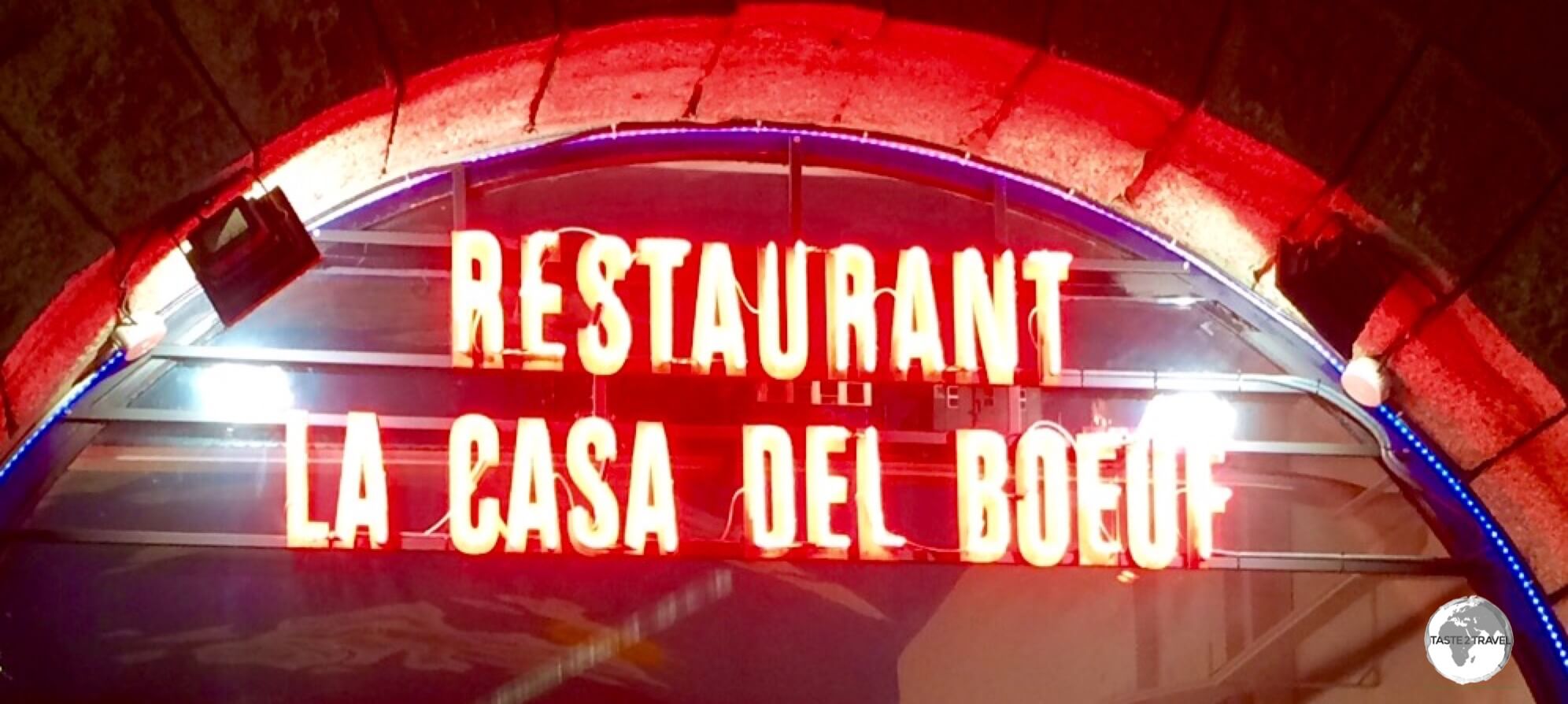
Delicious, good value meals can be found in many restaurants such as the Restaurant La Casa del Boeuf.
Nearby, Restaurant La Casa del Boeuf serves good French food prepared by its friendly French chef, Joel. The daily special offers a choice of four main courses, each served with a glass of house wine for just €10.50. I recommend the steak-frites with red wine – excellent value at that price.
Visa Requirements
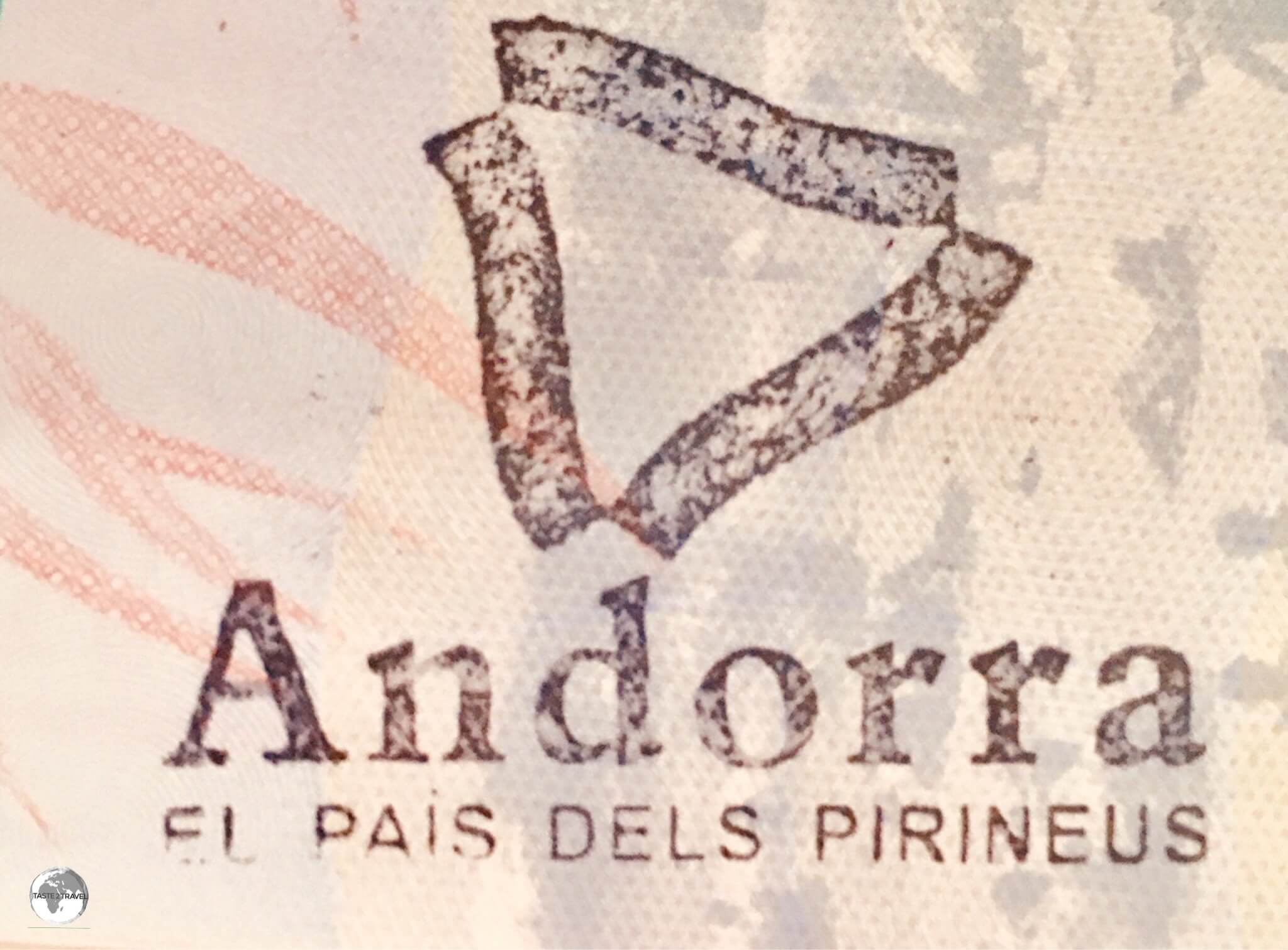
A souvenir passport stamp, ‘Estampa Turista’, is available from the immigration office at the border.
The visa policy of Andorra is wonderfully simple: the Andorran government imposes no visa requirements on its visitors, and requires only a passport or European Union national identity card for entrance.
However, you can enter the country only through Spain or France, both of which form part of the Schengen area. As a result, you must meet the Schengen entry requirements that apply to your passport. If your nationality requires a Schengen visa, make sure you obtain a multiple-entry visa. Andorra is not part of the Schengen area, so you must be able to re-enter the Schengen zone when you leave the principality.
Immigration Formalities
Andorra does not carry out routine immigration formalities at its borders. However, if you would like a souvenir passport stamp, you can request one at a border post.
Getting There
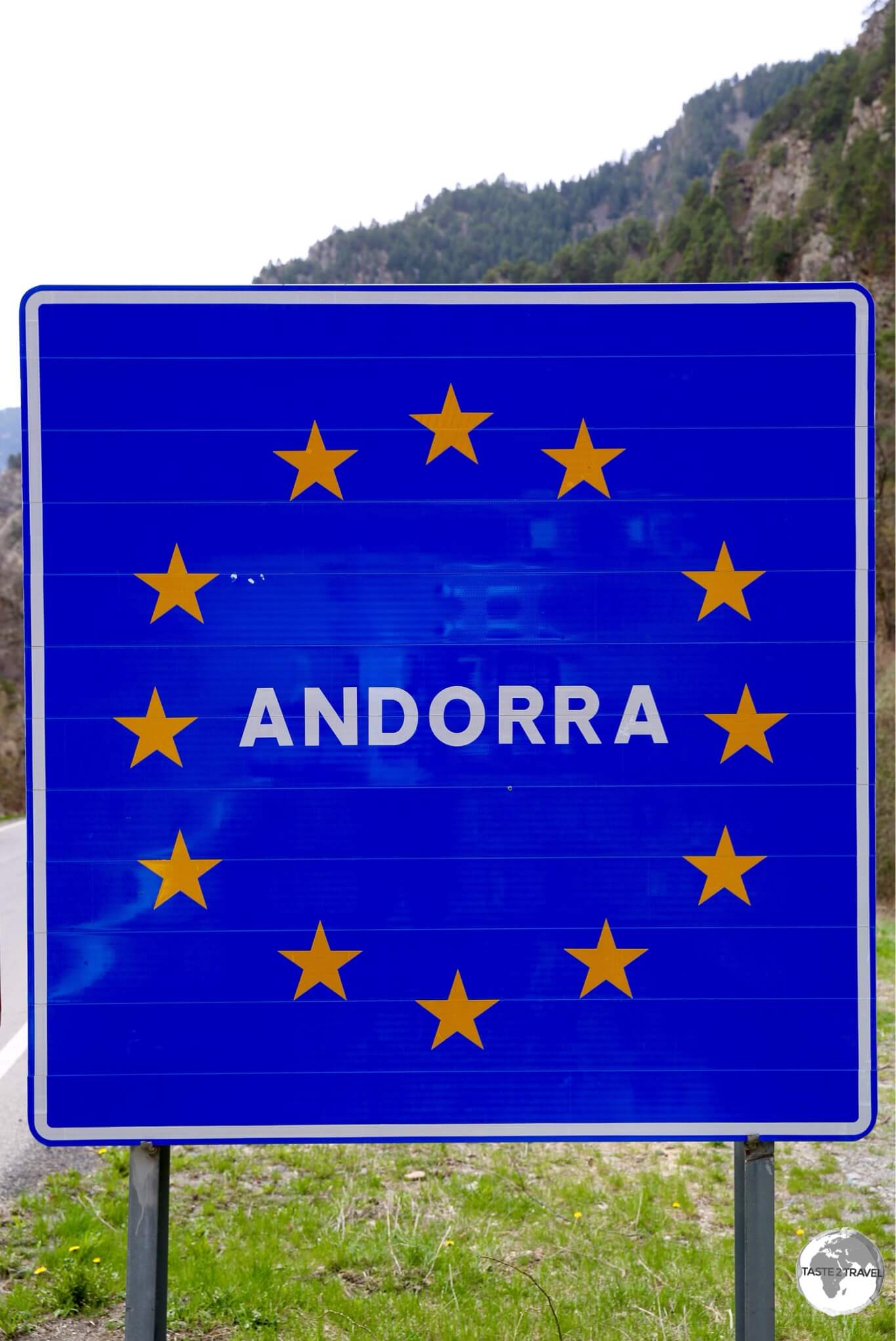
An Andorra Welcome Sign.
Air
Andorra’s mountainous terrain means the country has no airport. Instead, most visitors use either Spain’s Barcelona Airport or France’s Toulouse Airport. Regular daily buses connect both airports with the bus station in Andorra la Vella. The journey takes around three hours from either city. See the ‘Getting There – Bus’ section below for more information.
Road
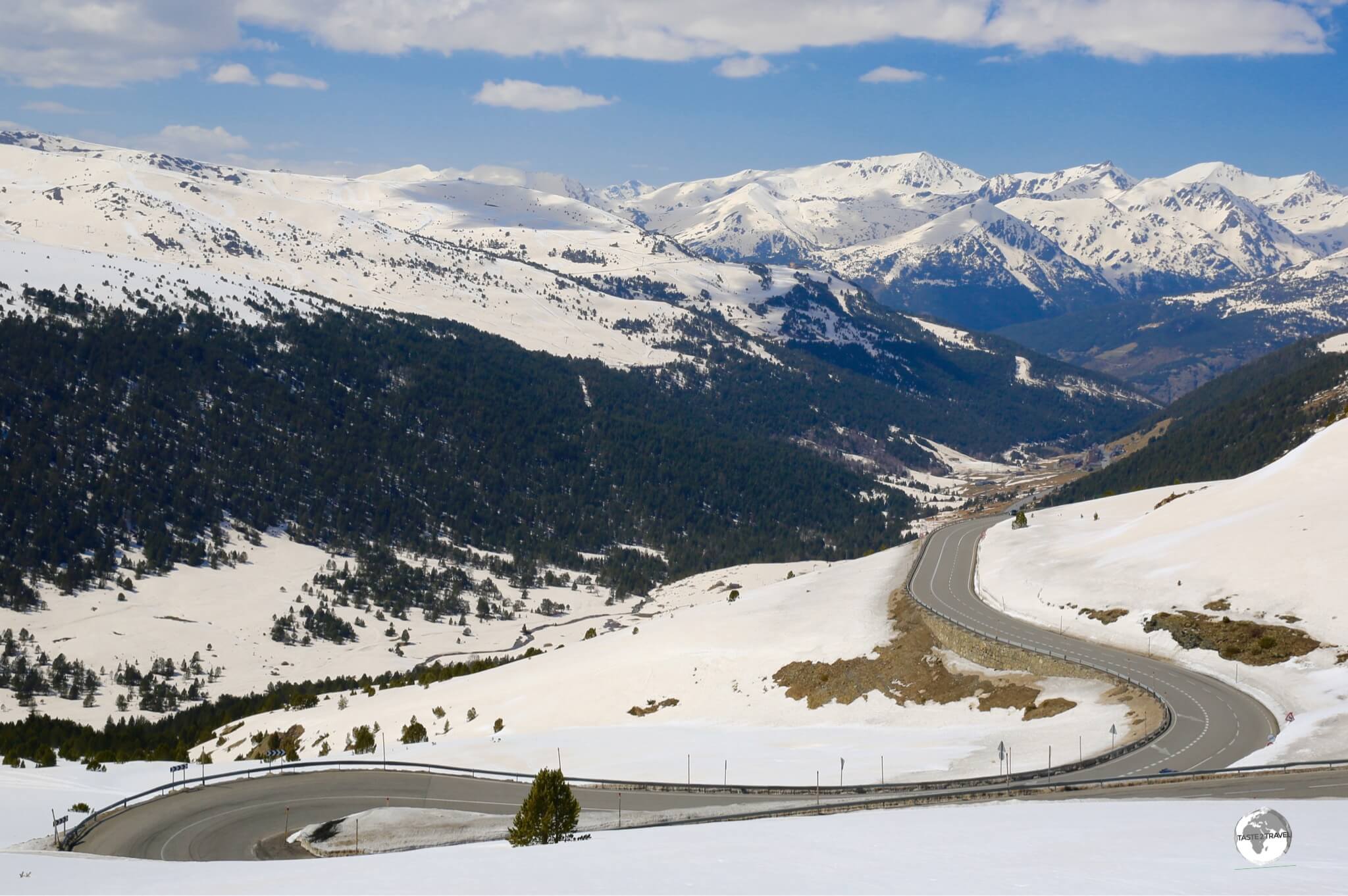
The only highway in Andorra cuts diagonally through the country from the Spanish to the French border.
Andorra’s mountainous landscape limits road access. One main road enters the principality from France, while another widely used route connects it with Spain. Most visitors enter and leave Andorra through one of these two border crossings. Traffic can build up, particularly when travellers leave the country, because Spanish and French customs officials often check vehicles and shoppers returning from Andorra.
Bus
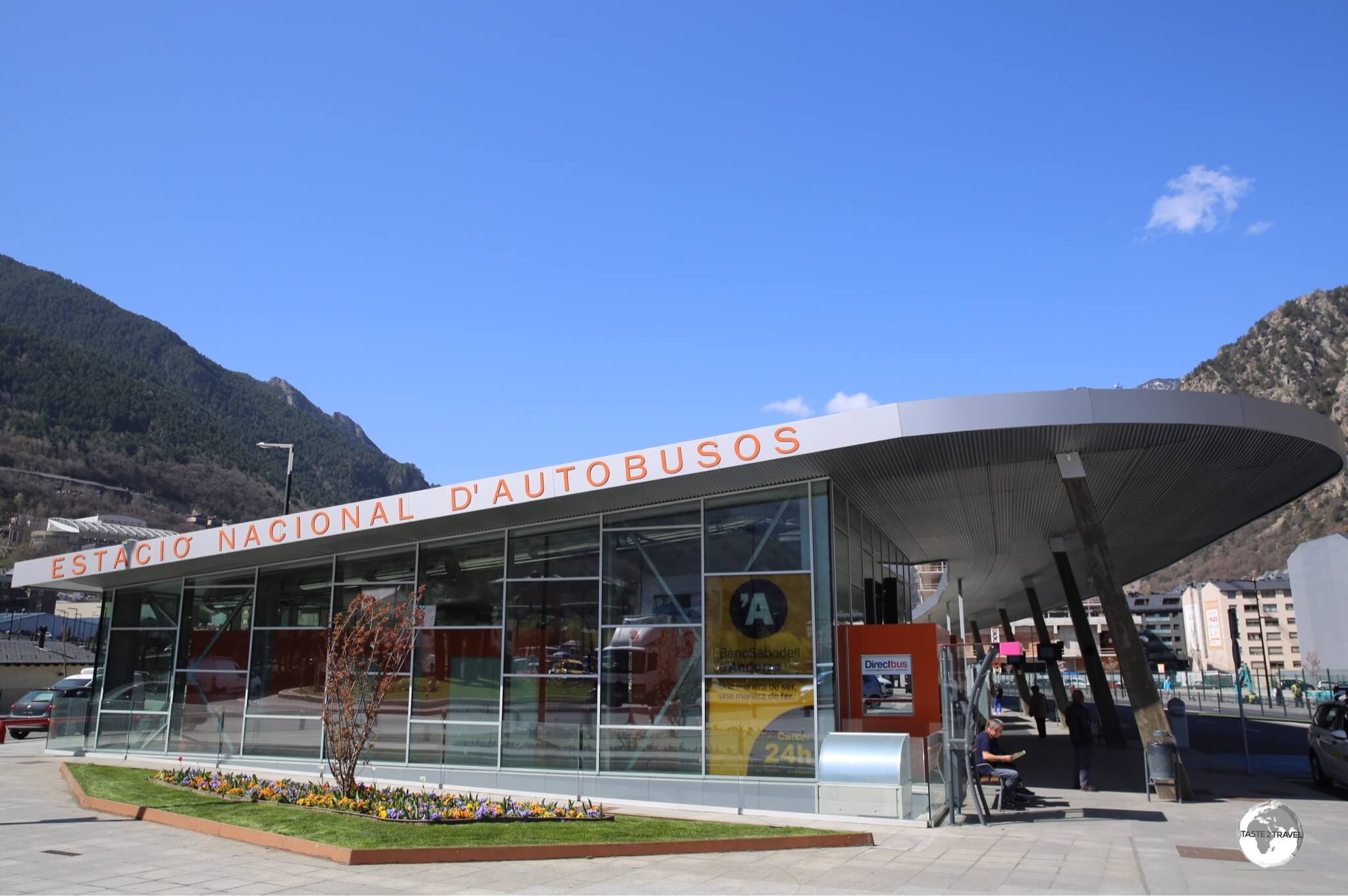
The modern and efficient bus station in Andorra La Vella.
Comfortable coaches connect Andorra with destinations in both Spain and France. The following operators provide international bus services; use the links for current timetables, fares and bookings: Spain
- Direct Bus: Offers 10 daily return services between Andorra and Barcelona Airport – with some services also stopping at Barcelona (Sants) bus station. Timetables, fares and bookings available here.
- ANDBUS (Andorra By Bus): Offers 7 daily return services between Andorra and Barcelona Airport. Timetables, fares and bookings available here.
- Montmantell Bus: Offers 14 daily return services between Andorra and the nearby Spanish town of La Seu d’Urgell. The current timetable can be viewed here.
- Montmantell Bus: Offers 6 daily return services between Andorra and the Spanish city of LLeida. The current timetable can be viewed here.
- Montmantell Bus: Offers 1 daily return service between Andorra and the Spanish coastal region of Costa Daurada (i.e. Tarragona). The current timetable can be viewed here.
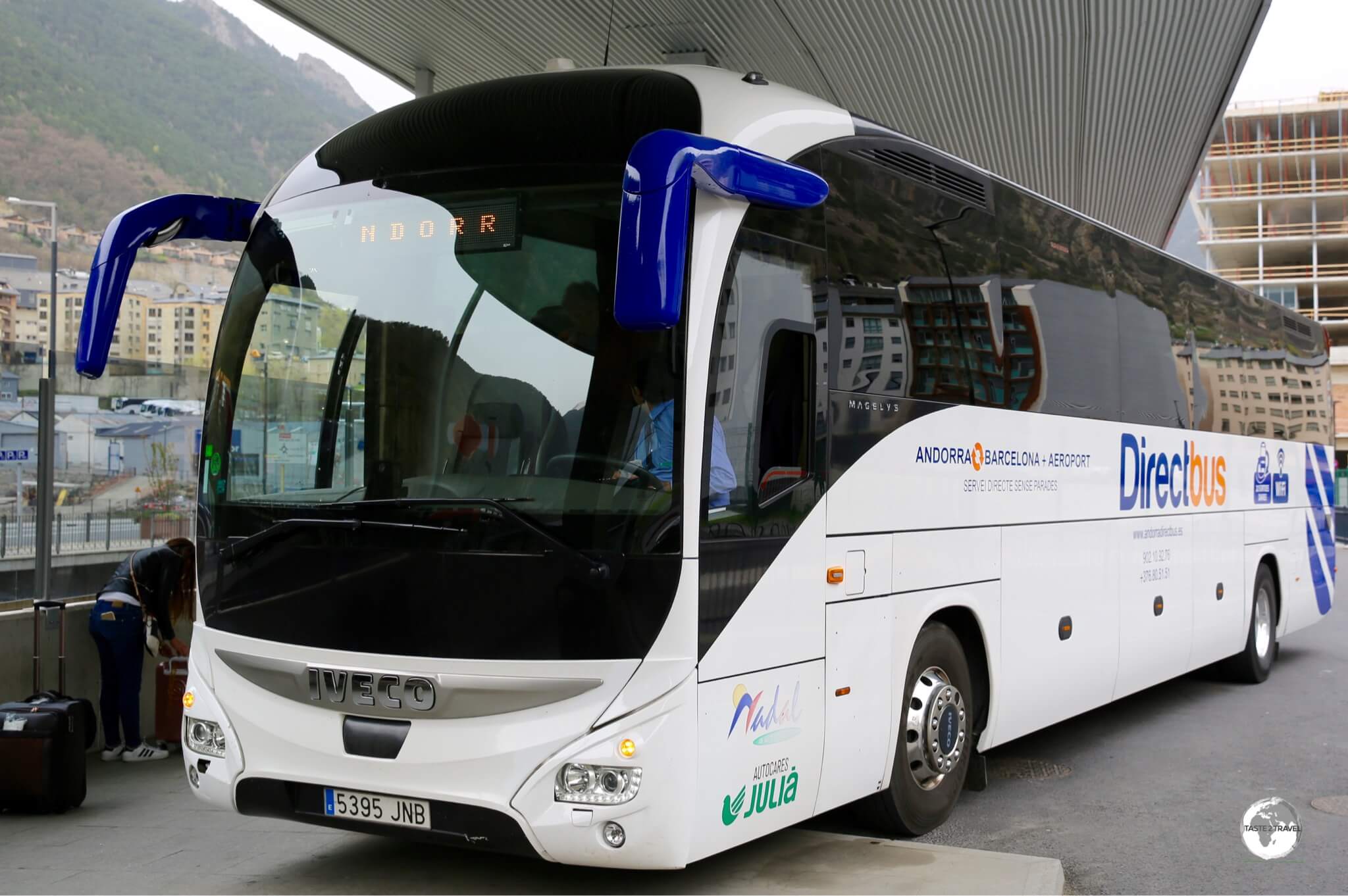
Comfortable coaches provide regular connections from Andorra to both Spain and France.
France
- ANDBUS (Andorra By Bus): Offers 3 daily return services between Andorra and Toulouse Airport. Timetables, fares and bookings available here.
- Montmantell Bus: Offers 2 daily return services between Andorra and the nearby French town of L’Hospitalet. The current timetable can be viewed here.
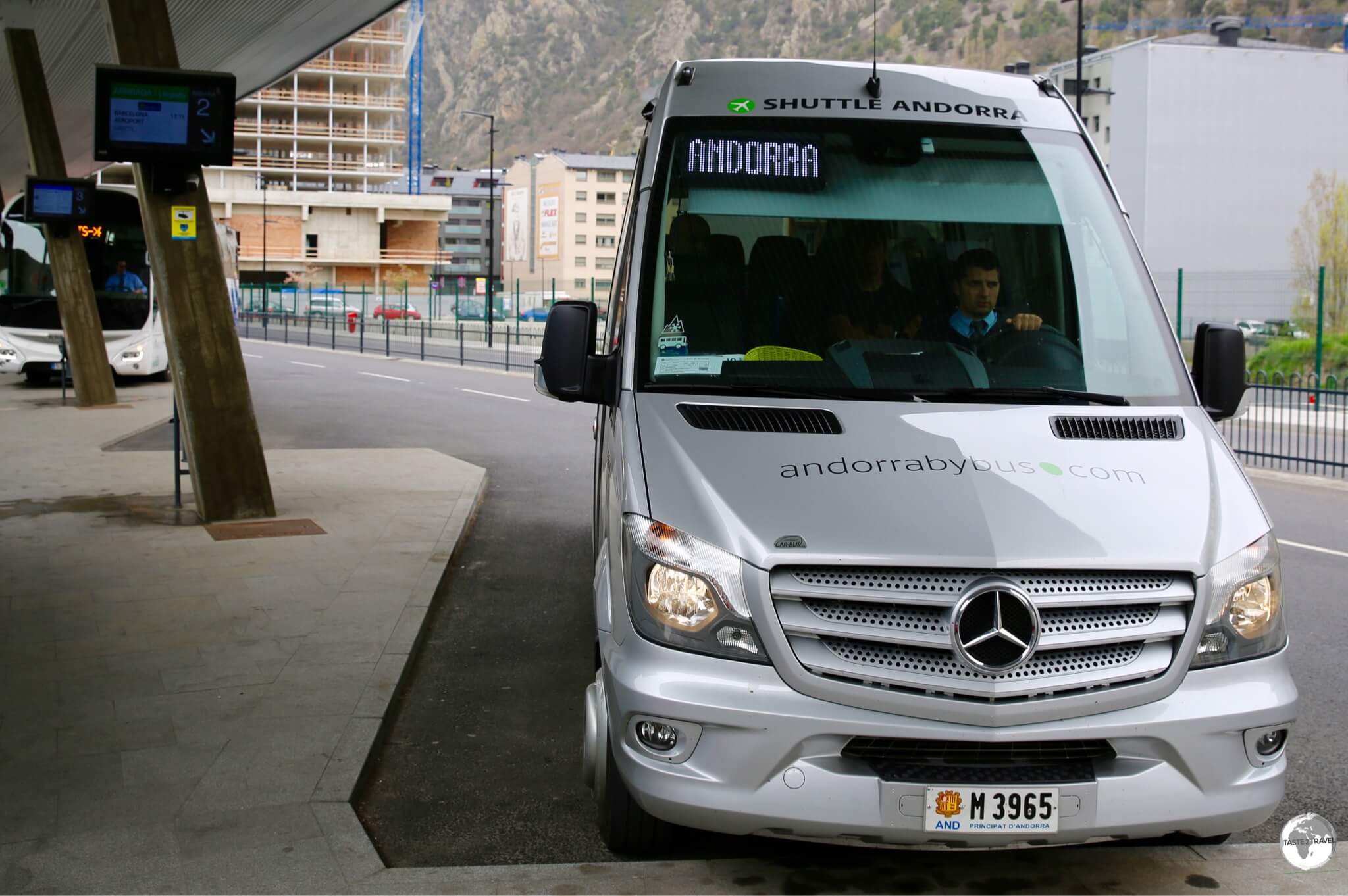
Smaller, faster minibuses also operate between Andorra and Barcelona.
Getting Around
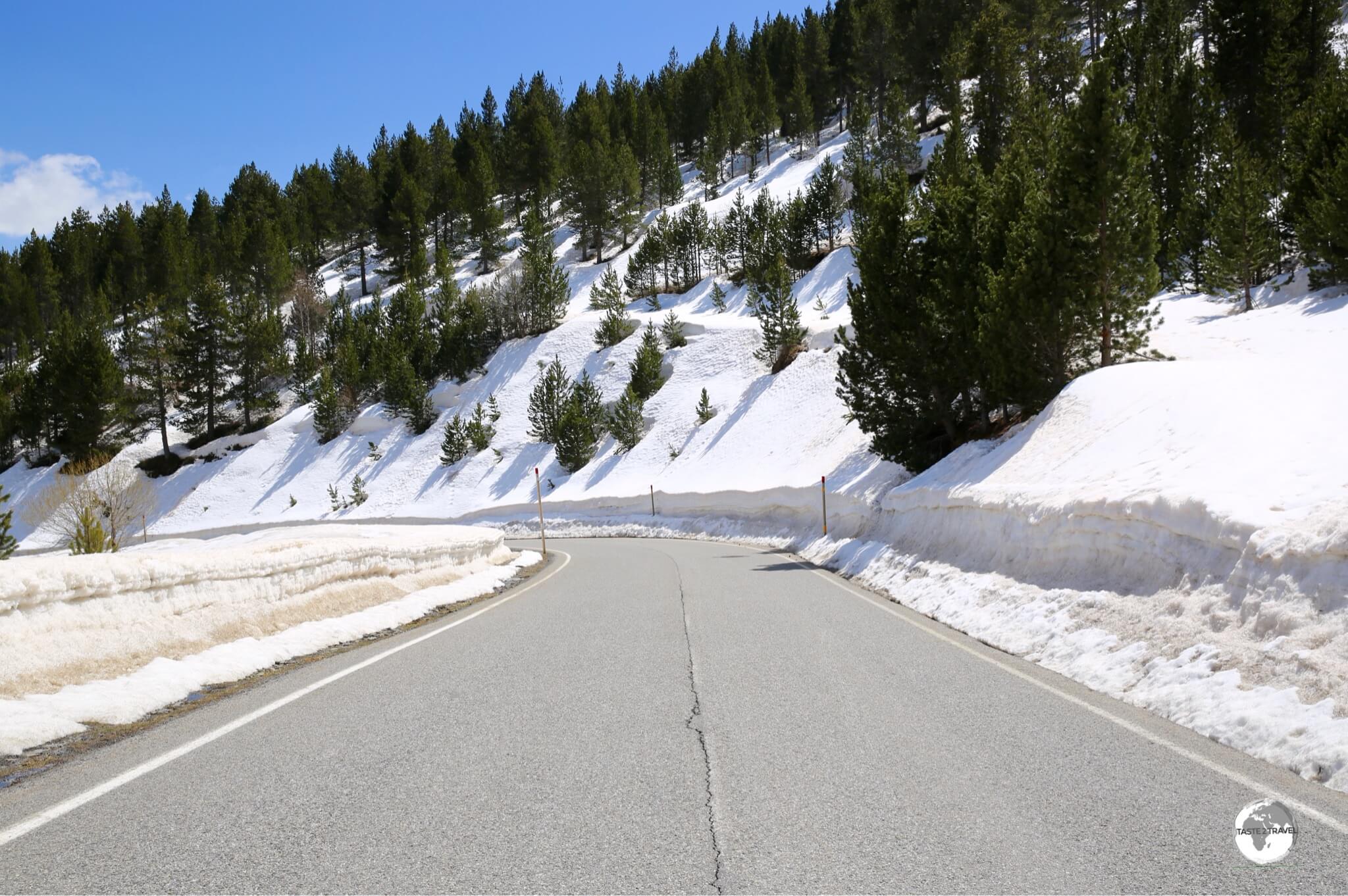
Roads in Andorra are generally in excellent condition.
Bus
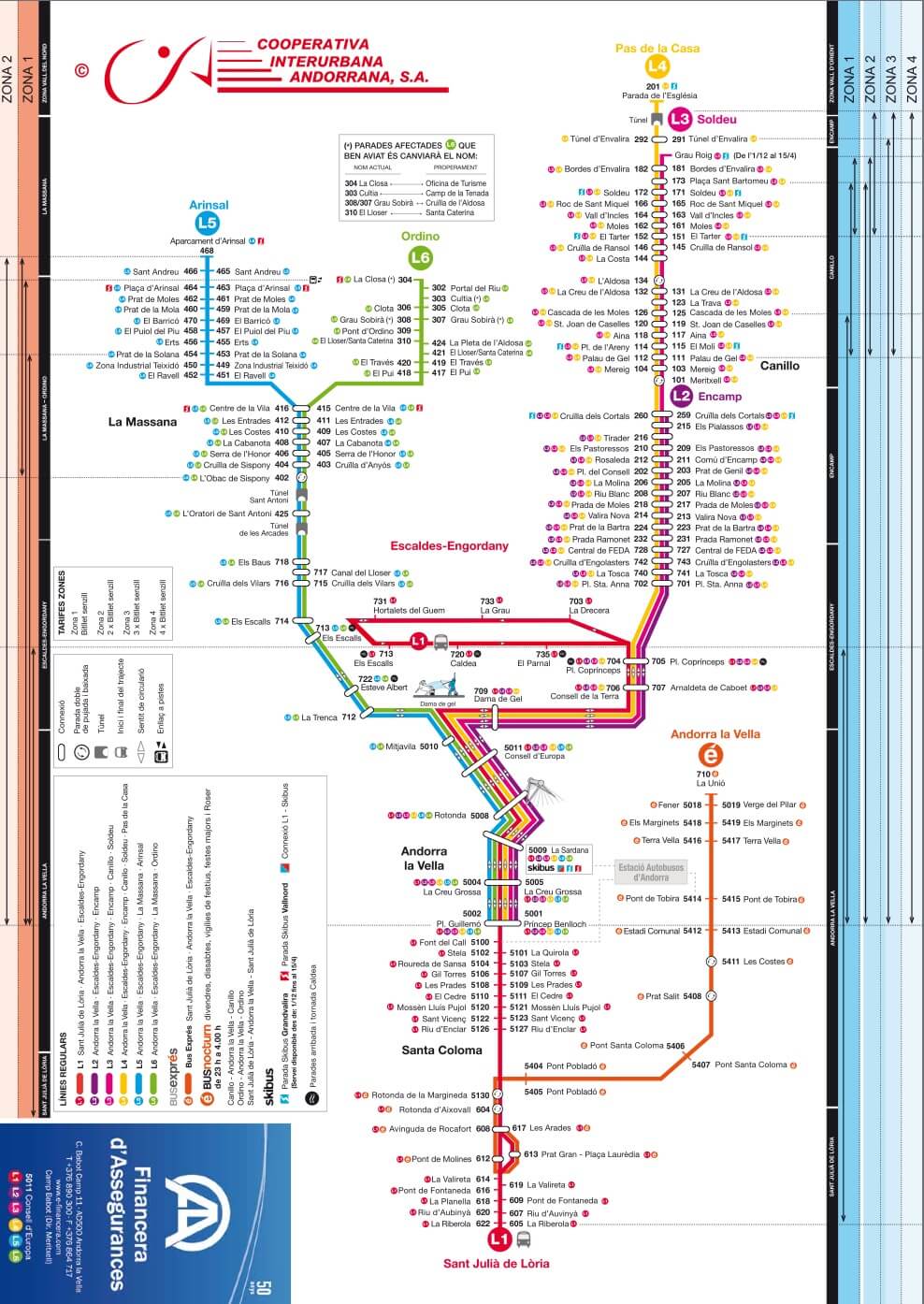
The national bus route map is available on the Interurbana website.
The Cooperativa Interurbana Andorrana operates Andorra’s public bus network. Its services connect Andorra la Vella with the country’s main towns. Six routes currently operate, and the company publishes detailed route plans, timetables, fares and information about season passes on its website. You can also download the company’s handy route map (shown above). Print it, fold it and carry it in your pocket as you explore.
Taxi
You’ll find taxi ranks around Andorra la Vella. Fares are reasonable; during my visit, a taxi from the bus station to the old town cost around €5.
Rental Car
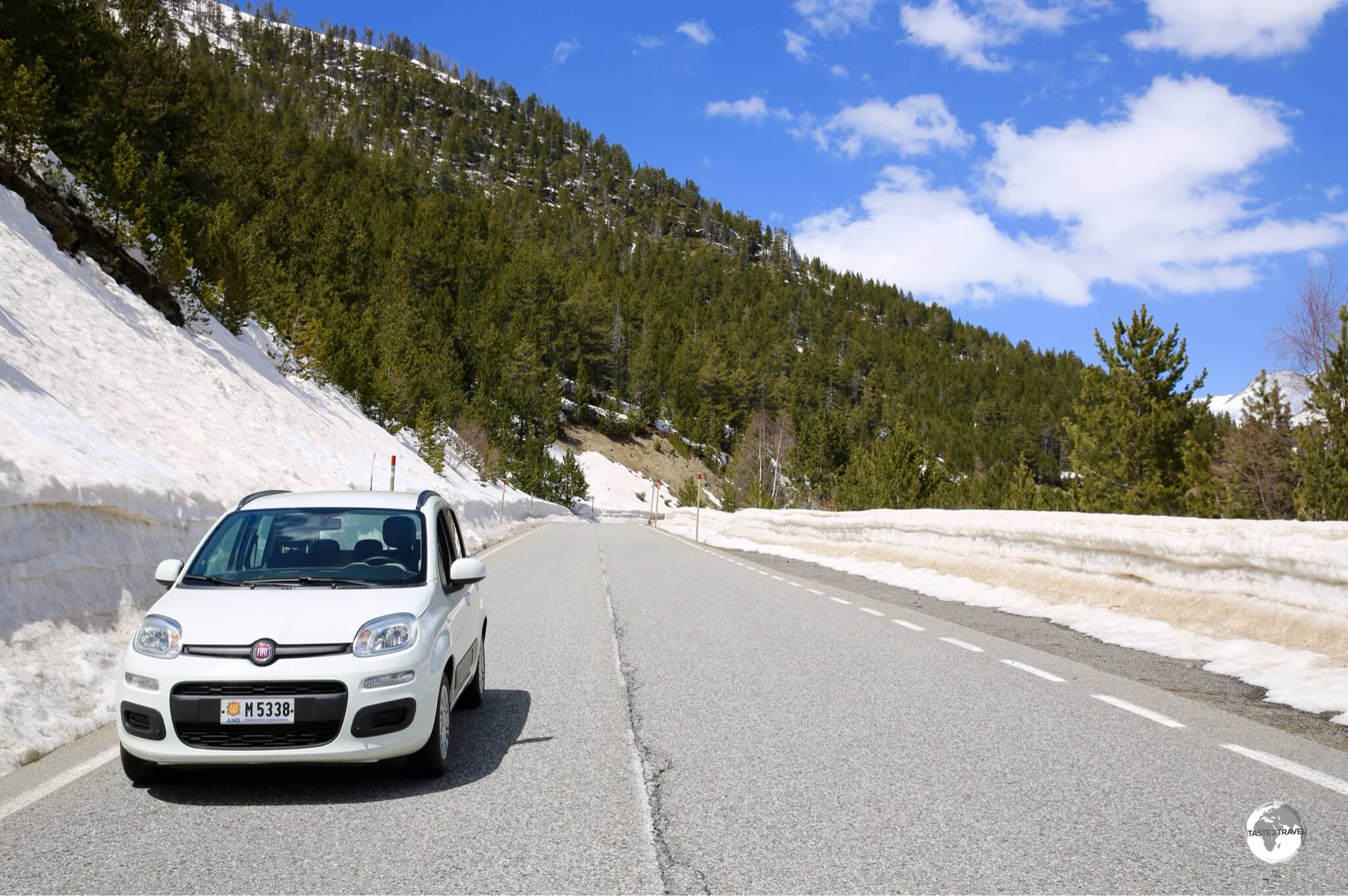
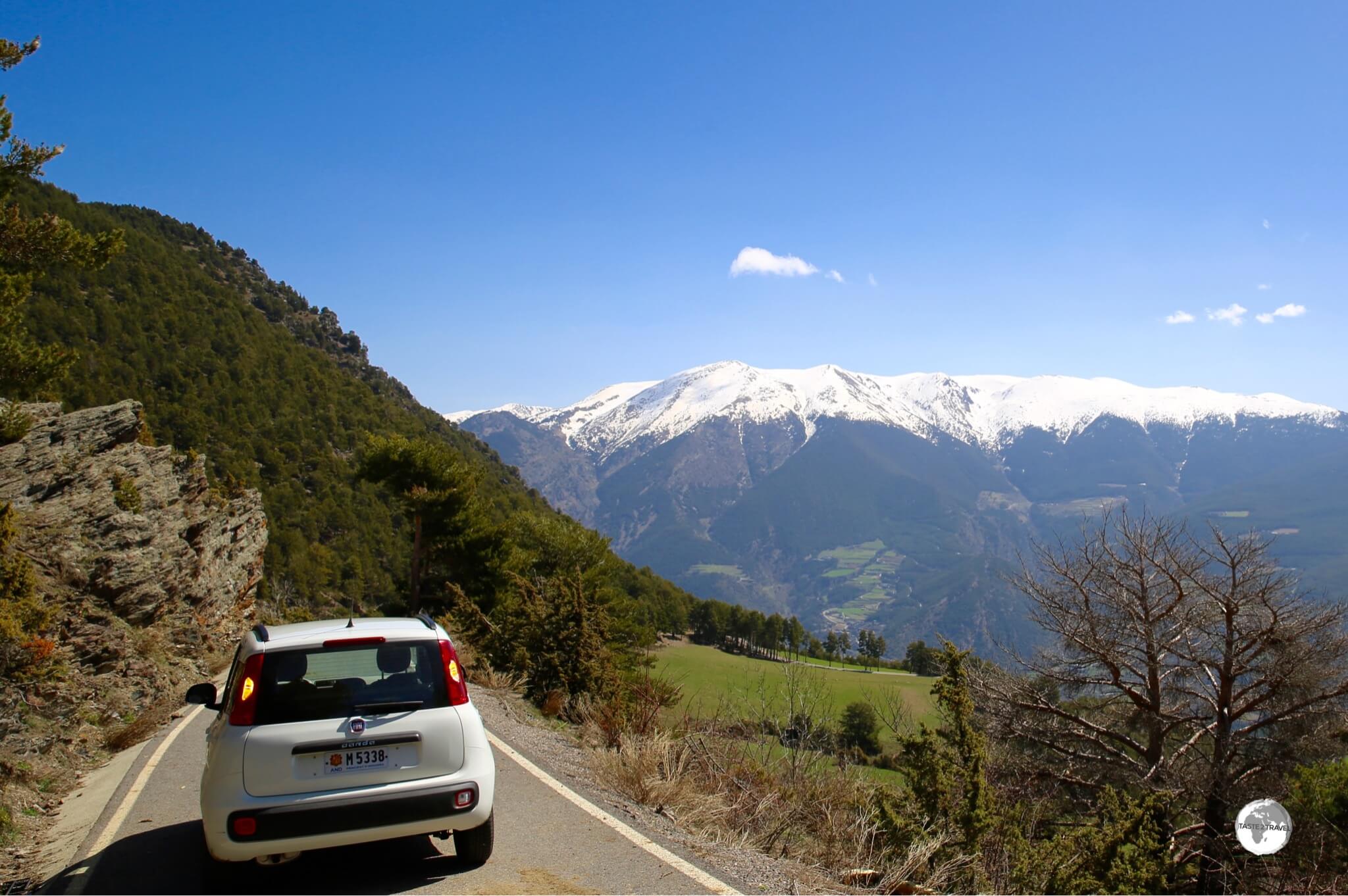
Exploring the Vallnord region in my rental car from Goldcar rental.
Public transport does not reach many of Andorra’s most scenic roads and mountain valleys. Therefore, if you want to make the most of your time and explore the principality in depth, hiring a rental car is the best option.
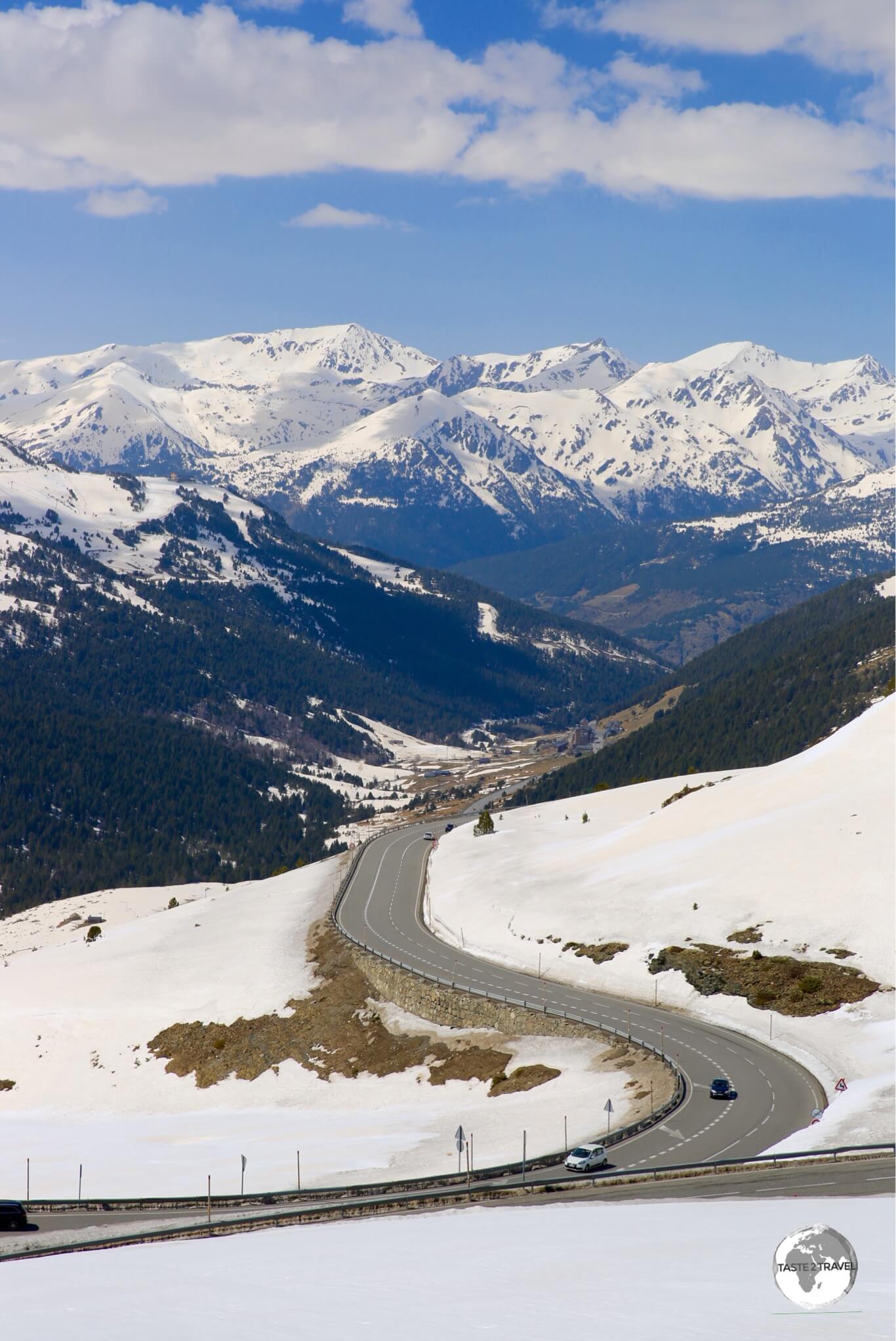
The national highway winds its way across Andorra, connecting the Principality to Spain and France.
Parking in the capital can be expensive because you’ll find almost no free parking. Municipal car parks are plentiful, but overnight parking can cost around €28. Fortunately, many hotels have agreements with nearby car parks and can arrange a discount of around 50%.
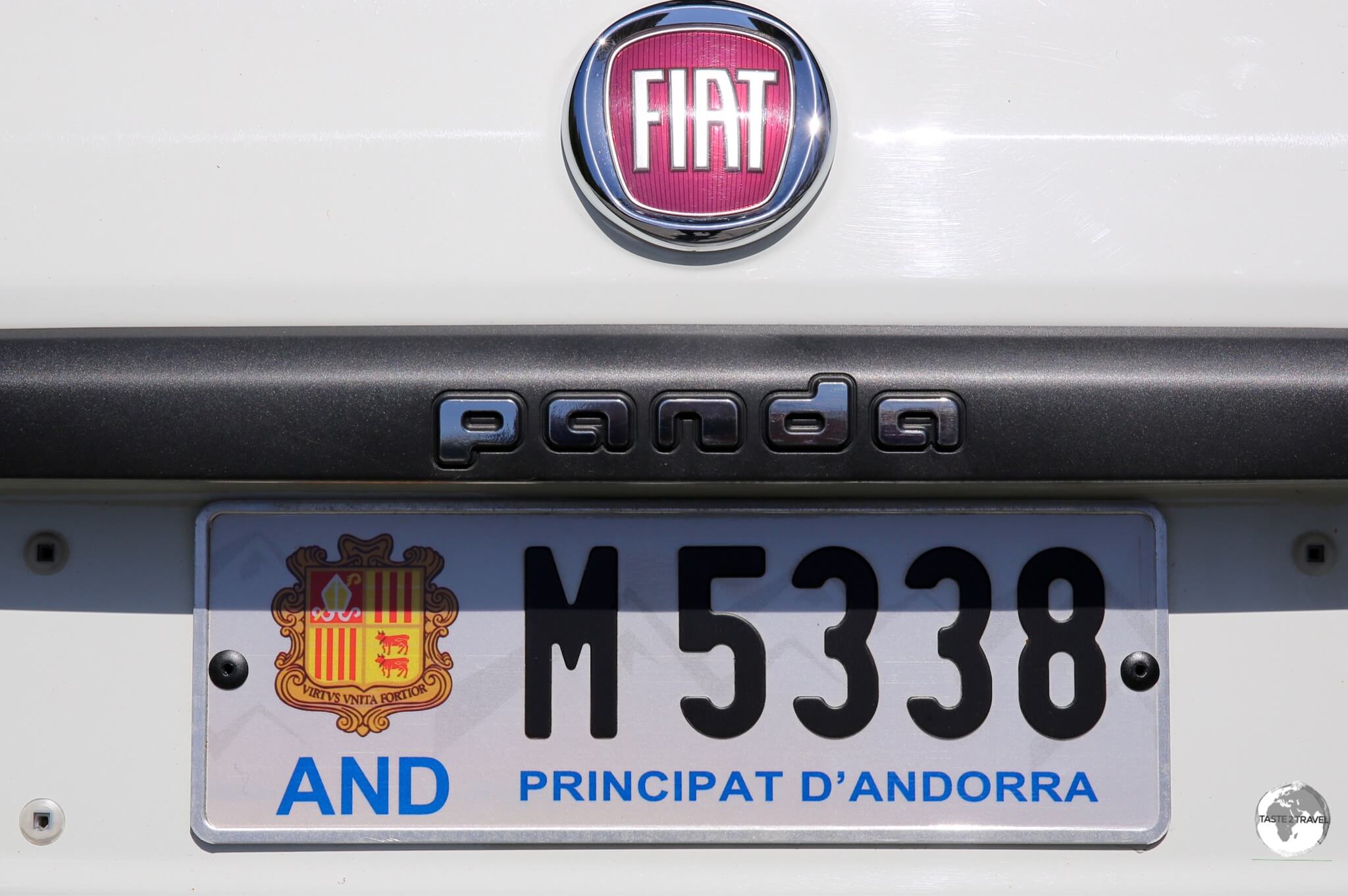
The Andorra license plate on my rental car.
If you plan to drive into France or Spain, remember to fill up in Andorra first. During my visit, fuel cost around €0.20 less per litre than in France and €0.10 less than in Spain. The many French-registered cars at service stations near the French border show just how popular this saving is.
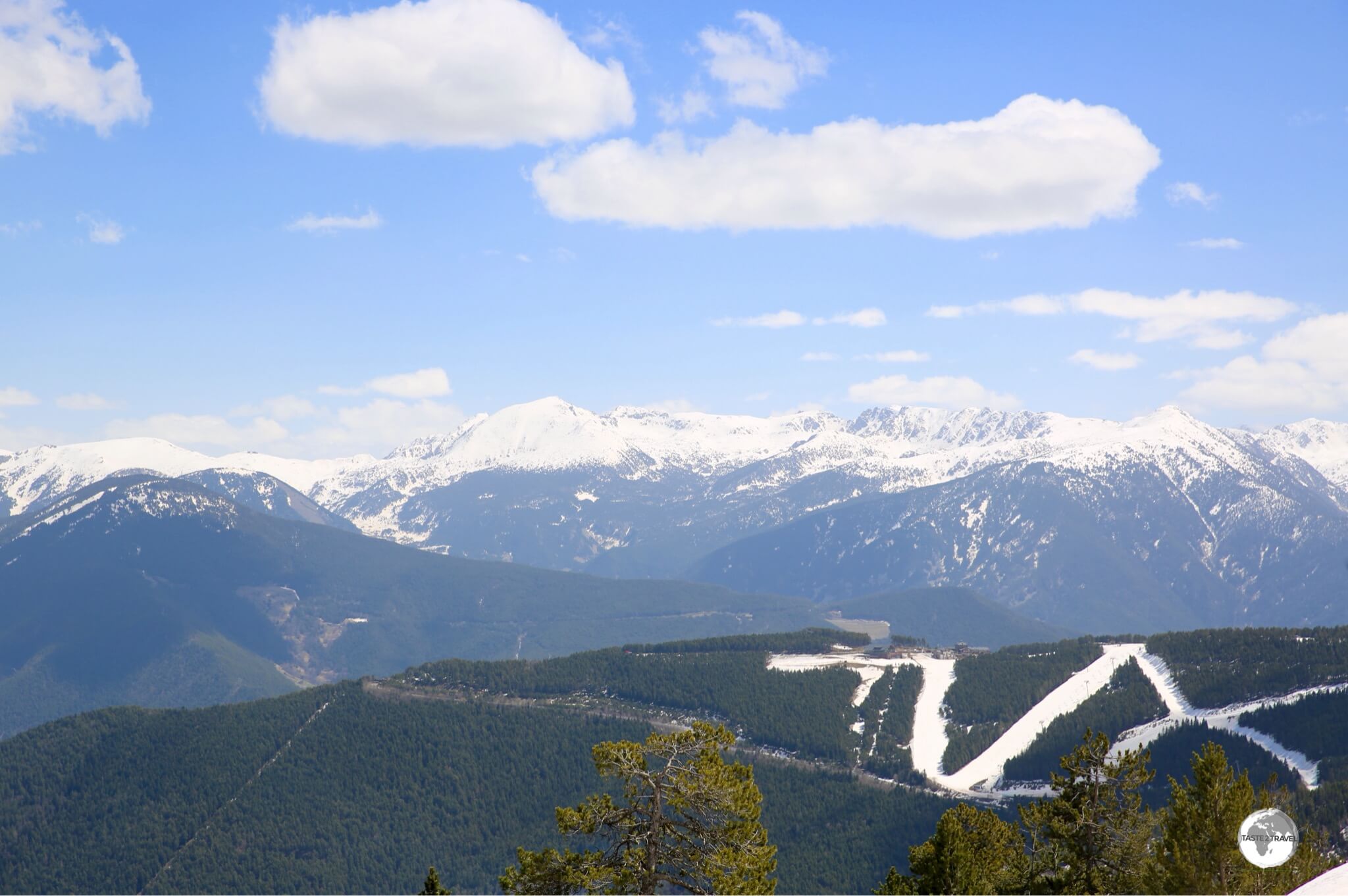
In the distance, the ski slopes of the Vallnord resort looks like a giant white snake slivering along the side of the mountain.
For professional service and competitive rates, I recommend Goldcar Rental. Its office is a short walk from the main bus station. Other car rental companies in Andorra la Vella include:
That brings me to the end of my Andorra Travel Guide. If you have any comments or feedback, please leave them using the form below.
Safe travels!
Darren